A toilet that starts rising instead of flushing properly gives you very little time to think. If you need to fix overflowing toilet fast, the priority is not the blockage itself – it is stopping more water from spilling onto the floor, getting into nearby rooms, or creating a hygiene problem in your home or business.
The good news is that the first steps are usually simple, even if the cause is not. Acting quickly can limit water damage, protect flooring, and stop a stressful situation from becoming a much bigger repair.
Fix overflowing toilet fast – first 60 seconds
Start by stopping the flow of water into the pan. If the toilet is still filling, remove the cistern lid carefully and lift the float arm or float cup to stop more water entering. On many toilets this will buy you a little time straight away.
Next, turn off the isolation valve or the toilet water supply valve. This is usually found on the pipe behind or beside the toilet. Turn it clockwise until it stops. If there is no local valve, you may need to turn off the main water supply to the property.
Do not flush again to see if it has improved. One extra flush is often what turns a manageable problem into standing water across the bathroom floor.
If water has already reached the floor, use old towels or cloths to contain it and keep it away from doorways, skirting boards, and nearby rooms. In commercial settings such as cafés, offices, schools or shops, it also makes sense to keep people out of the area until it is safe and clean.
Why toilets overflow in the first place
Most overflows come down to one of two issues. Either the waste cannot leave the pan properly because there is a blockage, or the cistern keeps feeding water into the toilet because a fill valve, float or internal fitting is faulty.
A simple blockage is the most common cause. Too much toilet paper, wipes, sanitary products, paper towels, and children’s items can all obstruct the trap or drain. Even products labelled as flushable can cause real trouble once they meet bends in the pipework.
The second issue is less obvious but just as disruptive. If the toilet keeps filling when it should stop, the cistern may overflow internally into the pan, or in some cases contribute to repeated running and poor flushing behaviour that makes blockages more likely. Older toilets and heavily used toilets in rental or commercial properties are especially prone to worn internal parts.
It is not always one or the other. A partial blockage plus a weak or faulty flush mechanism can create an unreliable toilet that works one day and overflows the next.
What you can safely try yourself
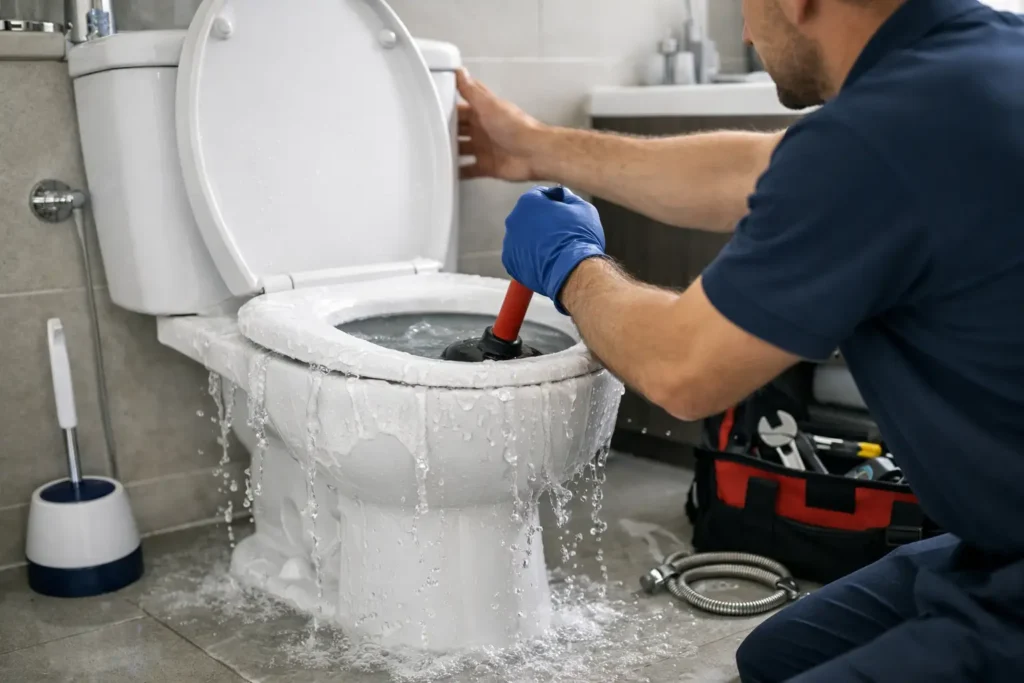
Once the water is under control, you can try to clear a straightforward blockage. A proper toilet plunger is usually the best first option. It needs to cover the outlet well enough to create pressure. Gentle but firm plunging often works better than aggressive pumping, which can splash contaminated water around the room.
If the water level is very high, wait a little before plunging or remove some water with a container so it does not spill over during the attempt. Wear gloves and clean the area thoroughly afterwards.
A toilet auger can be effective if the blockage is further into the trap. It is designed for toilets and is less likely to scratch the pan than improvised tools. This is a better option than trying to force the blockage with a coat hanger or similar object, which can damage the porcelain or push the obstruction further into the system.
Hot water and washing-up liquid are often suggested online, but this only helps in limited cases and should be used with care. Very hot water can crack porcelain, especially in older toilets. If you try this method, use warm water rather than boiling water, and do not rely on it if the toilet is already on the verge of overflowing.
When not to keep trying
There is a point where repeated DIY attempts stop being sensible. If the toilet stays full, drains very slowly, or overflows again after seeming to clear, the blockage may be further down the waste pipe or in the drain itself.
This matters because a deeper drainage issue can affect more than one fitting. If you notice slow sinks, gurgling sounds, bad smells, or another toilet backing up nearby, the problem may not be local to that one pan.
For landlords and letting agents, this is where quick action really matters. A single blocked toilet in an occupied property can quickly become a tenant complaint, a hygiene issue, and in some cases a source of damage to flooring and ceilings below. For businesses, one unusable toilet can disrupt staff, customers, and normal trading far more than expected.
Signs the problem is more serious
Some toilet overflows are a one-off blockage. Others are warning signs of a wider fault that needs proper repair. If you spot any of the following, it is sensible to get professional help sooner rather than later.
Multiple overflows in a short period usually suggest that the cause has not truly been removed. Water appearing around the base of the toilet can indicate a failed seal, loose connection, or cracked fitting rather than a straightforward blockage. A toilet that constantly runs into the pan may have worn internal parts, while waste water backing up into baths, showers, or floor gullies may point to a drainage problem beyond the toilet itself.
Commercial properties have an extra layer of urgency. In restaurants, cafés, hotels and schools, even a short-lived overflow can create a cleanliness issue and affect how people use the building. Fast repair is not just about convenience – it is about keeping premises safe, usable and presentable.
How to fix overflowing toilet fast without making it worse
The biggest mistakes usually happen when people panic. Repeated flushing is the main one. Using harsh chemical drain cleaners is another. These products are often ineffective on toilet blockages, can damage fittings, and leave the next person handling the problem exposed to chemicals.
It is also worth avoiding makeshift tools that can chip or crack the pan. A damaged toilet often turns a simple callout into a larger repair.
If the toilet has overflowed onto laminate, vinyl edges, timber flooring or into rooms below, do not ignore the cleanup once the immediate issue is controlled. Even a small amount of dirty water can leave odours, staining or hidden damage if it gets under flooring or into joints and edges.
What a plumber will usually check
A plumber will normally start by identifying whether the fault is in the toilet itself, the toilet waste, or the wider drainage system. That may involve checking the flush operation, the cistern internals, the pan trap, and the nearby waste run.
If the issue is a blockage, specialist tools can clear it more effectively and with less mess than repeated DIY attempts. If the internal toilet parts are faulty, replacing valves, flush mechanisms or seals is often a straightforward repair. Where the problem keeps coming back, a more thorough inspection helps prevent the same disruption happening again a week later.
This is often the difference between a quick fix and a proper fix. Stopping the immediate overflow is one part of the job. Preventing the next one matters just as much.
Preventing the next toilet overflow
Good habits make a real difference. Only flush toilet paper and human waste. Wipes, sanitary items, cotton pads, paper towels, nappies and food waste should stay out of the toilet completely, regardless of what the packaging claims.
If a toilet has been flushing weakly, filling slowly, running constantly or making unusual noises, it is worth getting it looked at before it fails at the worst possible moment. In busy homes, rental properties and workplaces, small toilet faults tend to become urgent ones because the fixture gets frequent use.
Routine maintenance also helps in older properties where pipework and fittings have had years of wear. Catching a worn valve, minor blockage or loose connection early is usually far cheaper than dealing with an overflow and the cleanup after it.
If you need a toilet repaired urgently, or you have a blocked or overflowing toilet in Hull, Beverley or the surrounding East Yorkshire area, contact HJZ Plumbing on 01482 236483 or visit www.hjzplumbing.com. Fast action now can save a great deal of mess, disruption and damage later.