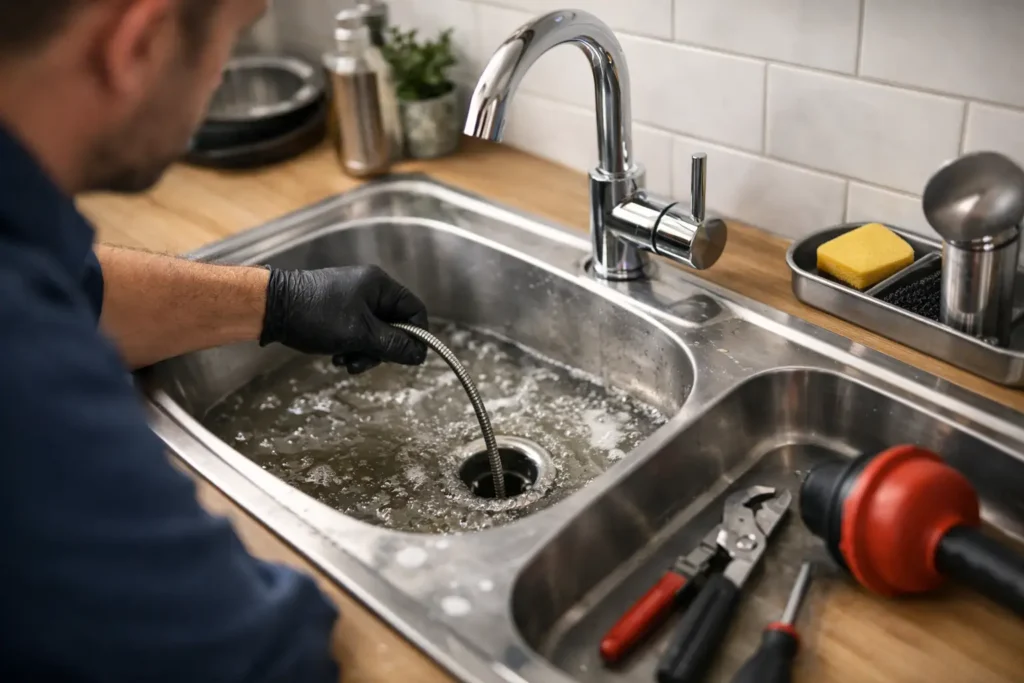
When you need to clear slow kitchen sink drainage, the temptation is to pour something down it and hope for the best. That can work if the problem is only a small build-up near the plughole, but many slow-running sinks are warning signs of a larger blockage forming further along the waste pipe. If water is draining away more slowly each day, smells are starting to build, or the sink backs up when the washing machine runs, it is worth dealing with it properly before it turns into a full blockage.
Why a kitchen sink starts draining slowly
In most properties, a slow kitchen sink is caused by grease, food waste, soap residue and small particles collecting inside the pipe over time. Kitchen waste pipes do not usually block all at once. The problem builds gradually as fat and debris cling to the inside of the pipe, narrowing the space water has to pass through.
That is why the sink may seem mostly fine one week, then noticeably slower the next. In some homes and commercial kitchens, the blockage may be close to the plughole or trap. In others, it sits further along the pipework, where repeated use keeps adding more debris. Older pipe runs, awkward bends and poor fall on the waste pipe can all make the problem worse.
There are also cases where the issue is not just one sink. If a kitchen sink drains badly while other appliances gurgle or nearby waste outlets are slow too, the restriction may be deeper in the drainage system. That is when a quick DIY fix often stops being enough.
How to clear a slow kitchen sink safely
If the sink is still draining, just slowly, start with the simple checks first. Remove any visible food debris from the plughole and clean the sink strainer if there is one. It sounds obvious, but a surprising number of slow drains are made worse by trapped scraps sitting right at the top.
Next, place a bowl under the trap beneath the sink and carefully undo it if it is accessible. The trap is designed to catch debris as well as hold water to stop smells coming back up. If it is clogged with grease or food residue, cleaning it out can improve drainage straight away. Wear gloves, take your time, and make sure the seals go back properly when you reassemble it.
A plunger can also help, particularly if the blockage is close to the sink waste. Add enough water to cover the plunger cup, block any overflow opening if your sink has one, and use firm, controlled plunges. The aim is to shift the build-up rather than force it tighter into the pipe.
Hot water can help with greasy residue, but it depends on the type of pipework and the nature of the blockage. A kettle of hot, not boiling, water followed by a little washing-up liquid may loosen light grease in a kitchen waste pipe. Boiling water is not always a good idea, especially with certain fittings or older plastic pipework, so caution matters.
If you want to clear slow kitchen sink waste without risking damage, it is best to avoid harsh chemical drain cleaners as a first step. They can be unpleasant to use, they do not always reach the real blockage, and they can make later repair work more difficult if the sink still needs professional attention. In occupied homes, rental properties, cafés and other working premises, that is a risk many people would rather avoid.
Signs the blockage is deeper than the trap
A slow sink does not always mean a simple clean-out under the basin will solve it. If the water level rises quickly when the tap is on, then takes a long time to drop, the restriction may be further along. If the sink smells bad even after cleaning the trap, trapped waste in the pipe run is a likely cause.
Gurgling noises are another clue. They can mean air is struggling to move through the system because water is squeezing past a partial blockage. If backing up happens when the dishwasher or washing machine empties, that often points to a shared waste issue rather than a problem at the plughole alone.
In commercial premises, a deeper blockage can build faster because the sink is used more heavily. Restaurants, takeaways, cafés and staff kitchens often deal with grease and food solids every day. In those settings, a slow sink is not something to leave for later. Hygiene, downtime and the risk of an overflow all become bigger concerns.
What not to do when trying to clear a slow kitchen sink
The biggest mistake is waiting too long. A slow sink rarely gets better on its own, and a partial blockage often turns into a complete one at the worst possible moment. Evening meal prep, a busy lunch service or tenant changeover day are common times for it to fail completely.
Another common mistake is repeatedly using off-the-shelf chemicals. If one treatment does not work, adding more usually does not solve the underlying problem. It may just leave caustic liquid sitting in the pipework or sink, which is unpleasant and unsafe to handle.
It is also worth being careful with improvised tools. Pushing wire, rods or other objects into the waste pipe can damage fittings, dislodge joints, or compact the blockage. Under-sink pipework is often more fragile than it looks, especially in older kitchens or rental properties where previous repairs may not have been ideal.
When to call a plumber for a slow kitchen sink
If you have cleaned the trap, tried basic plunging and the sink is still draining slowly, it is usually time to get it checked properly. The same applies if the problem keeps returning. A recurring slow drain suggests there is an ongoing build-up or a pipework issue that needs more than a temporary fix.
Professional drain clearing is often quicker and cleaner than repeated DIY attempts, especially where the blockage sits beyond the easy-to-reach parts of the waste pipe. A plumber can identify whether the issue is grease build-up, trapped debris, poor installation, pipe damage or a wider drainage problem affecting the property.
For landlords and letting agents, a slow kitchen sink can quickly become a tenant complaint, a hygiene concern and a risk to cabinets or flooring if it overflows. For businesses, even a minor drainage fault can disrupt staff areas or food preparation spaces. Early attention usually costs less than dealing with water damage, lost trading time or an emergency callout once the sink stops draining altogether.
How to stop the kitchen sink slowing down again
Prevention is usually straightforward, but it needs consistency. Try not to rinse fats, oils or grease into the sink, even with hot water. As they cool, they can cling to the inside of the waste pipe and trap other debris. Food scraps should go into the bin rather than down the plughole, and a simple sink strainer can make a noticeable difference.
Running hot water after washing up can help move light residue through the pipework, though it is not a cure for heavy grease build-up. Regular cleaning of the trap is useful in busy kitchens, especially where the sink sees a lot of daily use.
If the same sink becomes slow again and again, there may be something about the pipe run itself contributing to the problem. A poor gradient, too many bends, undersized waste pipe or older installation can all make blockages more likely. That is where practical advice from a local plumber is often more valuable than another bottle from the supermarket shelf.
Clear slow kitchen sink issues before they become emergencies
A slow kitchen sink is easy to put off because the water still disappears eventually. The trouble is that slow drainage often means a blockage is building, and once it reaches the tipping point, you are left with standing water, unpleasant smells and a kitchen that is difficult to use.
If you want the problem dealt with properly, HJZ Plumbing provides reliable help for blocked and slow-running kitchen sinks in homes and businesses across Hull and the surrounding area. Whether it is a domestic kitchen, rental property or commercial premises, the aim is always the same – find the cause, clear the blockage cleanly and help prevent the problem from coming back. To arrange a visit, call 01482 236483 or contact the team through www.hjzplumbing.com.
A slow sink is often the first warning, not the whole problem, and acting early usually makes the fix simpler, cleaner and less disruptive.