If your property still has older pipework, the question of lead pipe-why is dangerous for your health is not just theoretical. It affects the water coming out of your kitchen tap, the safety of your tenants or customers, and the wider condition of the building. For homeowners, landlords and businesses, this is one of those plumbing issues that is easy to ignore until you understand what may be entering the water supply.
Lead was widely used in pipework many years ago, especially in older homes and commercial premises. At the time, it was seen as practical and long-lasting. The problem is that what once looked like a durable material is now known to pose a genuine health risk, particularly when drinking water sits in lead pipes and picks up traces of the metal.
Lead pipe – why is dangerous for your health
The danger comes from lead leaching into water. You cannot see it, smell it or taste it in the same way you would notice dirty water or a blocked drain problem. A property can appear perfectly normal while the water supply is carrying small amounts of lead over time.
That matters because lead builds up in the body. Even low-level exposure can become harmful, especially if the water is used every day for drinking, cooking, making tea, filling kettles or preparing food. In occupied properties such as family homes, rental houses, schools, cafés and offices, repeated exposure is where the real concern lies.
Children, babies and pregnant women are particularly vulnerable. Lead exposure has been linked to problems with development and learning, which is why older supply pipes are taken seriously when they are discovered. Adults are not immune either. Long-term exposure can contribute to kidney issues, high blood pressure and other health concerns.
This is why lead pipework is not simply an old plumbing material. It is a health and safety issue that can affect households and workplaces in a way that is not obvious at first glance.
Why older properties are more at risk
In many older buildings, lead may still be present on the incoming water supply pipe rather than the more visible internal pipework. That means a property owner can replace taps, renew bathrooms and modernise kitchens, yet still have a hidden section of old pipe underground or entering the building.
Homes built before the 1970s are the ones most commonly associated with lead supply pipes, although age alone is not proof. Some properties have already had replacement work carried out, while others have not. Landlords and property managers should be especially alert where there has been little record of previous plumbing upgrades.
Commercial premises can face the same issue. Restaurants, cafés, schools, offices and older retail units may still have outdated supply arrangements. In those settings, the risk goes beyond one household. Staff, customers, visitors or pupils may all be using the same water source.
How lead gets into drinking water
Lead enters the water when it passes through lead pipes or fittings and slowly dissolves into it. This tends to be worse when water has been left standing in the pipes for several hours, such as overnight or during a period when the building has been empty.
That is why the first water drawn from a tap in the morning can sometimes carry the highest concentration. Hot water should never be used for drinking or cooking if lead pipes are suspected, as heated water can increase the amount of lead released.
Water chemistry also plays a part. Some supplies are more likely to react with lead than others. That means two properties of similar age may not behave in exactly the same way. It depends on the pipework, the water conditions and how the system is used day to day.
Signs you may have a lead pipe
One of the difficulties with lead pipework is that it often gives no obvious warning. Water can run clear and pressure can seem perfectly fine. Unlike a burst pipe, dripping tap or blocked waste pipe, there may be no direct sign that pushes the issue to the top of your list.
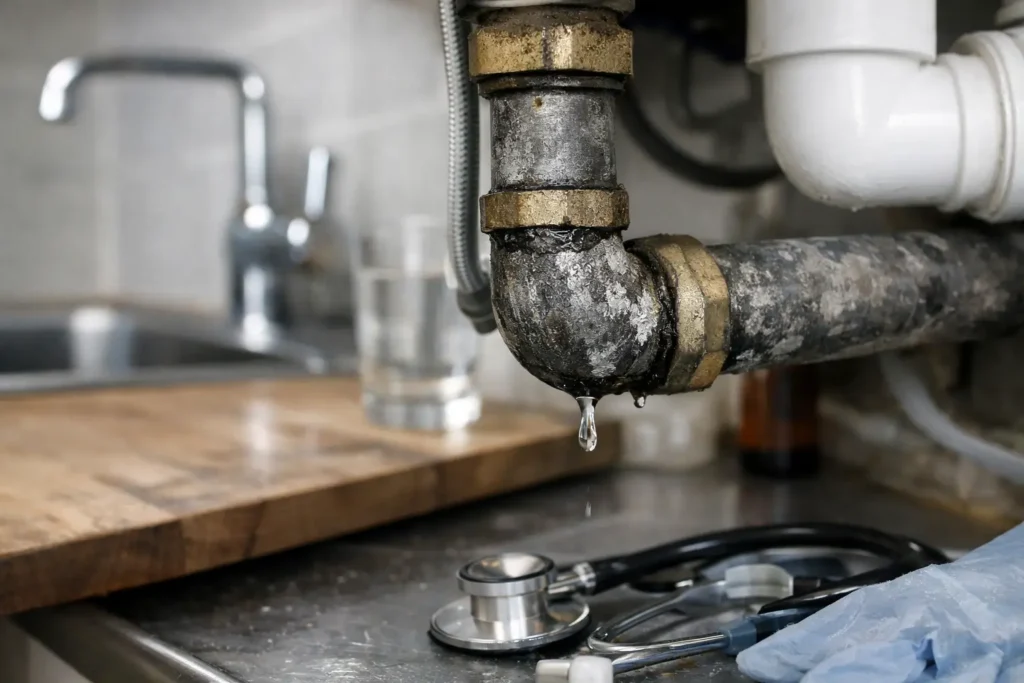
Still, there are a few clues. If your property is older and has never had a full pipework upgrade, lead is worth checking for. Exposed lead pipes are usually dull grey rather than copper-coloured, and they can feel quite soft compared with modern materials. If lightly scratched, they often reveal a brighter silver-coloured metal underneath.
The incoming supply pipe is the key area to inspect. This is often found where the main water line enters the building, such as under the kitchen sink, in a utility area, cellar or front cupboard. If you are not sure what you are looking at, it is best to have it checked properly rather than guess.
Why replacement is usually the right answer
When people ask about lead pipe-why is dangerous for your health, the next question is often whether the pipe can simply be left alone if it is not leaking. From a practical point of view, that is rarely the best long-term plan.
Lead pipework may still function in the basic sense of carrying water, but that does not make it safe or suitable for continued use. If you know or strongly suspect that the incoming supply is lead, replacement is usually the clearest way to reduce the risk. It also removes uncertainty for future buyers, tenants and anyone else using the property.
There can be short-term measures in some cases, such as flushing water through taps after it has stood for a long time. That may reduce exposure, but it is not a proper fix. It also depends on people remembering to do it every day, which is not realistic in many homes or shared premises.
For landlords and commercial operators, relying on workarounds can create unnecessary risk. A permanent upgrade is more reliable, easier to manage and better for the long-term condition of the building.
What happens during a lead pipe replacement
Replacing a lead supply pipe is a straightforward job when planned properly, but the exact work depends on where the pipe runs and how the property is laid out. In some buildings, the affected section is short and relatively accessible. In others, there may be external groundworks, awkward access points or older internal fittings that need attention at the same time.
A good plumber will first identify whether lead is present, where it starts and ends, and whether there are any related issues that should be dealt with during the same visit. Sometimes an old supply pipe replacement is also a good opportunity to improve isolation points or tidy up outdated connections indoors.
The value of doing the job properly is not just about replacing one material with another. It is about leaving the property with a safer, more dependable water supply and reducing the chance of future disruption.
Advice for homeowners, landlords and businesses
If you own an older home and have never checked the incoming water pipe, this is worth doing sooner rather than later. It is one of those issues that can sit unnoticed for years, especially if there are no leaks or visible faults. Waiting until a renovation starts is possible, but earlier checks give you more control over timing and cost.
If you are a landlord or letting agent, lead pipework should be treated as part of responsible property upkeep. Tenants are unlikely to know what type of supply pipe serves the building, and they may be using that water every day without question. Replacing suspect pipework is a sensible step that protects both the property and the people living in it.
For commercial premises, the same principle applies. If your business serves food or drink, accommodates guests, or has staff and customers on site throughout the day, water quality matters. A hidden lead supply pipe is not something you want to discover after a complaint or a refurbishment survey.
Older plumbing issues are often easiest to resolve when handled early, before they become tied up with other repairs, tenant concerns or trading disruption. If you are unsure whether your property has lead pipework, getting clear advice now is far better than putting it off.
If you need help checking old pipework or arranging a replacement in Hull, Beverley or the surrounding area, contact HJZ Plumbing on 01482 236483 or visit www.hjzplumbing.com. We will give you honest advice, explain what needs doing, and help you put the problem right before it becomes a bigger concern.