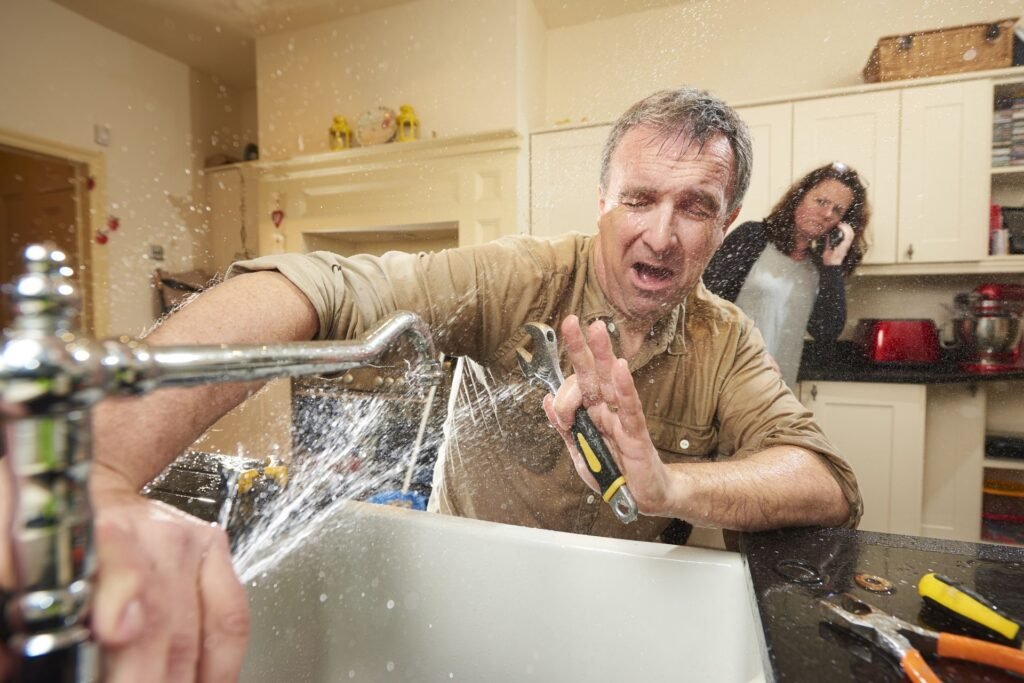
A leak rarely gives you much warning. One minute everything seems fine, and the next you have water spreading under a sink, through a ceiling, or across a kitchen floor. In that moment, knowing where to find stop cock in property can save time, limit damage, and make a stressful situation far easier to control.
The stop cock is the main valve that turns off the incoming water supply to your property. If a pipe bursts, a tap will not stop running, a toilet overflows, or a flexi hose splits under a basin, this is often the first thing you need. Yet many homeowners, tenants, landlords, and even business staff do not know where it is until there is a problem.
Where to find stop cock in property
In most properties, the internal stop cock is fitted close to where the mains water pipe enters the building. That usually means it is somewhere on the ground floor, often near the front of the property, but not always. The exact position depends on the age of the building, its layout, and whether plumbing has been altered over the years.
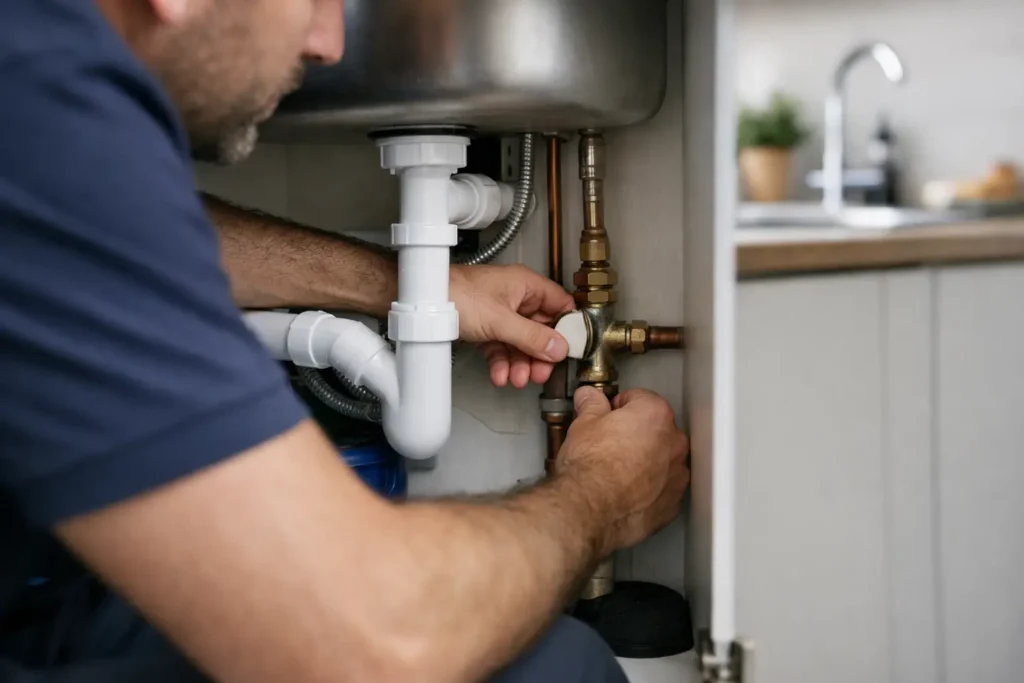
The most common place is under the kitchen sink. This is often the first place to check, especially in houses and older flats. Look at the back of the cupboard, near the pipework, and you may see a small tap-like valve attached to the incoming mains pipe.
If it is not there, the next likely spot is under the stairs. In many homes, particularly older terraces and semis, the mains pipe comes in near the front door and the stop cock is fitted in a cupboard or tucked against the wall beneath the staircase.
Some properties have it in a downstairs toilet, utility room, pantry, or hallway cupboard. In others, it may be boxed in behind a removable panel, particularly if previous renovation work has hidden the pipework. In commercial units, shops, cafés, and offices, it may be in a plant room, service cupboard, kitchen area, or staff toilet.
Flats can be less straightforward. There may be an individual stop cock inside the flat, often under the sink or in an airing cupboard, but in some buildings there is also a shared or building-level valve in a communal riser cupboard or service area. If you manage rental property, it is worth confirming both.
What a stop cock looks like
A stop cock is usually fitted on a water pipe and has either a small round handle or a tap-style head that turns clockwise to shut the water off. Some are brass, some are plastic, and older ones can look worn or slightly corroded. They are not always easy to spot if the area is cluttered or dark.
It helps to follow the mains pipe if you can see where it enters the building. The stop cock will normally be fitted on that line before the pipe branches off to sinks, toilets, or appliances. If you find several valves, the main stop cock is generally the one closest to the point where water enters the property.
Do not confuse it with the isolation valves fitted to individual taps, toilets, washing machines, or dishwashers. Those smaller valves only shut off water to one fixture or appliance. The main stop cock cuts off water to the whole property.
Other places to check if you cannot find it
If your first look does not turn it up, check behind kitchen appliances, inside fitted cupboards, near the water meter if you have one, or close to the internal side of an external wall facing the street. In some homes, especially where layouts have changed, the stop cock may be in a less obvious place such as a garage, cellar, or extension.
Older buildings can be awkward because pipe routes may have been altered several times. Newer properties can also be confusing if boxing, units, or floor finishes hide access points. That is why it is a good idea to locate it before there is an emergency, not during one.
If you are a landlord or letting agent, this matters even more. Tenants often panic when water starts leaking and may not know what they are looking for. A simple note in the property file showing the stop cock location can prevent a small issue becoming a major repair.
What if the internal stop cock is stuck or broken?
This is more common than people expect. A stop cock that has not been touched for years can seize up, become stiff, or start to leak when you try to turn it. Sometimes it only closes part way, which is no help if water is coming through quickly.
Do not force it too hard. If the valve snaps, the situation can get worse very quickly. Try turning it gently clockwise. If it is stiff, use steady pressure rather than sudden force. If it still will not move, you may need the external stop tap or a plumber’s help.
This is one of those jobs where prevention pays off. A stop cock should be checked occasionally so you know it works when needed. If it is old, hard to reach, or unreliable, replacing it is often a sensible bit of maintenance rather than something to leave until there is a leak.
Where is the external stop tap?
If you cannot use the internal stop cock, the external stop tap may shut off the water from outside the property boundary. This is often found in the pavement, footpath, driveway, or front garden, usually under a small cover marked for water.
That said, external stop taps are not always easy to access. Covers can be buried, jammed, or hidden by gravel, paving, soil, or parked vehicles. In some commercial settings or blocks of flats, the external control may serve more than one unit, so care is needed.
If you are dealing with a serious leak and cannot isolate the supply safely, it is best to get professional help quickly. Water damage spreads fast, especially in occupied homes, rental properties, schools, restaurants, and other busy premises where flooring, ceilings, electrics, and stock may all be at risk.
How to turn the stop cock off safely
Turn the valve clockwise until it stops. Once the water supply is off, open the cold taps to help drain residual water from the system. If the leak is near electrical fittings, do not take risks. Keep clear of affected areas and get the right help.
If water is escaping from a flexible hose, tap tail, toilet feed, or appliance connection, shutting off the main supply should stop the immediate flow. You can then contain what is left with towels, buckets, or trays until repairs are carried out. The sooner the supply is isolated, the less chance there is of damage to units, flooring, plaster, and decorations.
Why every property should have this checked
A stop cock is easy to ignore because most of the time you never need it. But when something fails, it becomes one of the most important valves in the building. Homes, rental properties, cafés, shops, offices, and schools all benefit from knowing exactly where it is and whether it works properly.
There is also a practical side to this beyond emergencies. If you are replacing taps, fitting a toilet, repairing pipework, or carrying out bathroom and kitchen work, a reliable stop cock makes the job easier and safer. If it is hidden, seized, or badly fitted, even simple plumbing work becomes more disruptive.
For landlords and commercial operators, the issue is not just repair cost. It is downtime, tenant stress, customer disruption, hygiene concerns, and the knock-on effect of rooms or facilities being out of use. A small amount of planning now can save a much larger problem later.
When to call a plumber
If you cannot find the stop cock, cannot turn it off, or suspect it is faulty, it is worth getting it checked before the next urgent leak catches you out. The same applies if the valve is leaking, heavily corroded, boxed in with no proper access, or fitted in a place that is impractical during an emergency.
A plumber can identify the main shut-off point, test whether it works, replace worn valves, and make sure you have a clear way to isolate the water supply when needed. In some cases, fitting a more accessible modern valve is a straightforward improvement that gives real peace of mind.
If you need help finding or replacing a stop cock, dealing with a leak, or sorting urgent plumbing problems in your home, rental property, shop, café, office, or other premises, contact HJZ Plumbing on 01482 236483 or through www.hjzplumbing.com. A quick check today can save a lot of damage tomorrow.