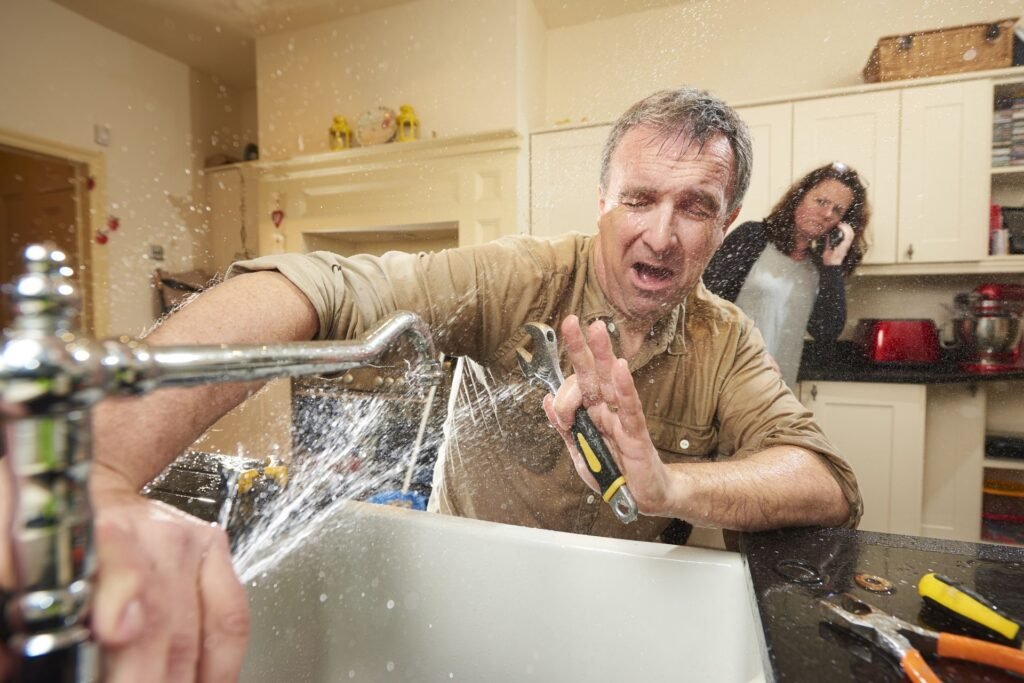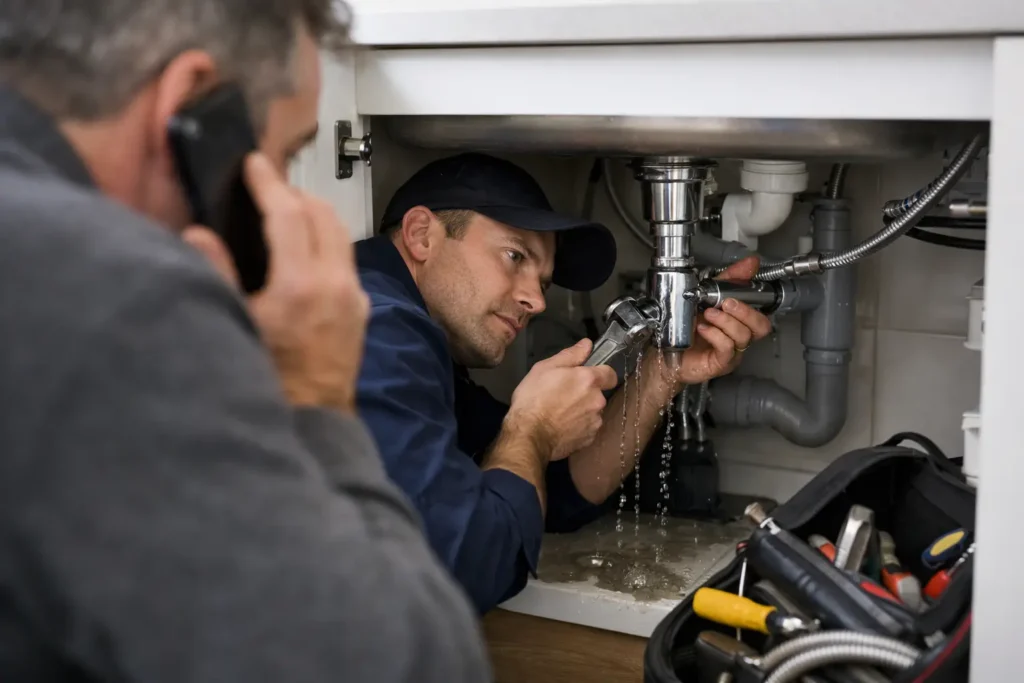
A pipe bursts on a Sunday night, water is coming through the kitchen ceiling, and the tenant cannot get hold of anyone. In that moment, the question is not just can a landlord call emergency plumber services, but whether they should do it straight away to limit damage and keep the property safe.
In most cases, yes, a landlord can call an emergency plumber when there is an urgent plumbing problem. If there is a serious leak, overflowing toilet, blocked waste causing hygiene concerns, no working toilet in the property, or a fault that could damage the building, quick action is usually the sensible and reasonable step. Waiting too long can turn a repair into a much bigger problem, especially in occupied homes, shops, cafés, offices, and other busy premises.
When a landlord can call an emergency plumber
The key issue is urgency. Emergency plumbing is usually justified where there is immediate risk to the property, the tenant’s health, or the normal use of essential facilities. A burst pipe is the obvious example, but it is not the only one.
A landlord would normally be right to arrange an emergency plumber if water is escaping and cannot be controlled, if a toilet is blocked and there is no other toilet available, if a leak is affecting electrics or ceilings, or if drains are backing up inside the building. The same applies where a faulty shower valve, broken tap, or failed pipework is causing active flooding or serious water damage.
The reason is practical rather than legalistic. A landlord has a duty to keep the property in good repair, and urgent plumbing faults can worsen by the hour. Water does not politely wait until Monday morning. It stains ceilings, damages flooring, affects neighbouring rooms, creates hygiene issues, and can leave a tenant unable to use the property properly.
Does a landlord need the tenant’s permission?
This is where it depends on the situation. For routine plumbing work, landlords should normally give proper notice before entering a rented property and arrange access with the tenant. A dripping tap, a planned toilet replacement, or a non-urgent shower repair would not usually justify turning up unannounced.
An emergency is different. If there is a genuine urgent risk, a landlord can usually take reasonable steps to gain access and arrange repairs, particularly where delay would cause damage or put people at risk. That does not mean ignoring the tenant. It means trying to contact them quickly, explaining the problem clearly, and keeping a record of what happened.
If the tenant is present and cooperative, the process is straightforward. If they are away, not answering, or unable to deal with the problem, a landlord may still need to act. The more serious the fault, the stronger the case for immediate attendance.
What counts as a real plumbing emergency?
Not every plumbing issue needs an emergency callout. That matters because landlords and letting agents want to act quickly without overreacting.
A genuine emergency usually involves one or more of the following: active water escape, risk of structural damage, loss of essential sanitation, internal drain backups, or a fault that could disrupt the safe use of the building. In commercial premises, the threshold can be even lower because a blocked toilet, leak, or drainage issue may affect staff, customers, hygiene standards, or the ability to trade.
By contrast, a slow-dripping tap, a mildly sluggish basin, or a cosmetic issue in a bathroom may be urgent to schedule, but not an out-of-hours emergency. The right response depends on the actual risk, not just the inconvenience.
Examples where calling out is usually justified
If a tenant reports water pouring through a ceiling, a toilet overflowing onto the floor, or a kitchen waste pipe leaking into cabinets, it makes sense for a landlord to call an emergency plumber. The same goes for repeated blockages causing foul smells or sewage backing up indoors.
In HMOs, restaurants, cafés, hotels, schools, and offices, speed matters even more because several people may be affected at once. One failed toilet or bad leak can quickly become a hygiene issue or force parts of the premises out of use.
Examples where it may be better to book a standard repair
If the issue is a small drip under control with a bucket, a worn tap washer, or a shower that is temperamental but still usable, that may be better handled during normal hours. It is still worth reporting and fixing quickly, but it may not need an emergency attendance.
This is where clear communication helps. Tenants should describe what is happening, whether the water supply has been isolated, whether another toilet is available, and whether the leak is affecting lights, sockets, walls, ceilings, or neighbouring rooms.
Can the landlord choose the plumber?
Usually, yes. In most cases the landlord is responsible for arranging the repair and paying the contractor, so they can choose a plumber they trust. For landlords and managing agents, that often means using a local firm that can respond quickly, communicate clearly, and leave the property tidy.
That said, there are situations where a tenant may call a plumber first, especially if they cannot reach the landlord and the problem is severe. If that happens, the question often becomes whether the cost was reasonable and whether the situation was genuinely urgent. Good records matter. Photos, call logs, and messages can all help show that immediate action was necessary.
What should a landlord do before the plumber arrives?
Speed matters, but so does control. If the tenant is on site, they should be asked to turn off the water at the stop tap if it is safe to do so. If the leak is near electrics, they should avoid the area and report that clearly. If water is spreading, moving belongings and putting down towels or containers can reduce damage until help arrives.
Landlords should also pass on accurate information to the plumber. A vague report of “there’s a problem in the bathroom” slows everything down. It is more useful to say that the toilet is overflowing, the shut-off valve is stuck, or water is coming through the ceiling below the en-suite. That allows the plumber to arrive prepared.
Why acting early protects more than the plumbing
The biggest mistake with emergency plumbing is hesitation. Some landlords worry about cost, access, or whether the problem is serious enough. Those concerns are understandable, but delay often costs more than the callout.
A small leak behind a toilet can soak floors and ceilings. A blocked drain can become a sanitation issue. A failed shower tray waste can damage the room below before anyone notices the full extent. In rental property, delays also damage trust. Tenants remember whether someone took the problem seriously.
For commercial premises, the knock-on effects are even sharper. A café with unusable toilets, a hotel with a leaking en-suite, or an office with a blocked washroom has a problem that goes beyond maintenance. It affects reputation, staff welfare, and day-to-day operations.
Can a landlord call emergency plumber services outside normal hours?
Yes, if the situation genuinely warrants it. Many urgent plumbing faults do not happen neatly within office hours, and waiting until morning is not always realistic. The important point is whether the callout is proportionate to the risk.
A dependable emergency plumber should not just stop the immediate problem. They should make the area safe, explain what has failed, advise on any follow-up work, and help the landlord understand whether the issue is a one-off or part of a wider maintenance concern. That is often the difference between a temporary patch and a proper repair plan.
A sensible approach for landlords and letting agents
The best approach is simple. Treat active leaks, major blockages, failed toilets, and water damage risks as urgent. Try to contact the tenant straight away. Keep clear records. Use a reliable plumber who can assess the problem properly and act without making a mess of the property.
Where the issue is not a true emergency, still move quickly, just through a booked repair rather than a panic callout. That balance matters. It keeps costs sensible while still protecting the building and the people using it.
If you are dealing with an urgent plumbing problem in Hull, Beverley, or surrounding parts of East Yorkshire, HJZ Plumbing can help with fast, practical support for landlords, homeowners, letting agents, and occupied commercial premises. For emergency call-outs and straightforward advice, contact HJZ Plumbing on 01482 236483 or visit www.hjzplumbing.com. When water is going where it should not, getting the right help quickly usually makes all the difference.