You turn the heating on, wait for the room to warm up, and one radiator stays stubbornly cold. If you are asking, “why is my radiator cold”, the good news is that the cause is often something straightforward. The less good news is that leaving it too long can lead to poor heating, higher running costs, and more wear on the system.
A cold radiator does not always mean the whole heating system has failed. Sometimes the radiator is cold all over. Sometimes it is hot at the top and cold at the bottom, or warm on one side and cold on the other. Those details matter because they point to different faults. Knowing what you are dealing with helps you decide whether it is a quick check or a job for a plumber.
Why is my radiator cold in one room?
If just one radiator is not heating properly while others are working, the fault is usually local to that radiator rather than the wider system. The most common causes are trapped air, sludge build-up, a stuck valve, or an issue with balancing.
Trapped air is one of the first things to suspect if the radiator is cold at the top but warm lower down. Air can collect inside the radiator and stop hot water circulating fully. In many cases, bleeding the radiator solves it. If you hear gurgling noises or notice uneven heating, that makes trapped air even more likely.
If the radiator is warm at the top but cold at the bottom, sludge is a more likely cause. Over time, rust, dirt, and debris can settle inside the radiator and restrict the flow of hot water. This is especially common in older systems or where heating performance has gradually declined rather than failing suddenly.
A radiator that stays completely cold may have a valve problem. The thermostatic radiator valve, often called the TRV, can stick shut, especially after sitting unused through warmer months. The lockshield valve on the other side can also be closed too far. Sometimes it is a simple adjustment. Sometimes the valve needs freeing off or replacing.
Cold radiator patterns and what they usually mean
The exact way a radiator feels can tell you a lot.
Cold at the top
This usually points to air trapped in the radiator. Bleeding it may restore full heat quite quickly. If the same radiator keeps needing to be bled, there may be another issue causing air to enter the system, and that is worth investigating before it becomes a repeat problem.
Cold at the bottom
This is often a sign of sludge or debris build-up. A single affected radiator might be improved by flushing that radiator through, but if several are heating poorly, the system may need a more thorough clean.
Cold on one side
This can happen when the radiator is not balanced properly or when a valve is partly blocked or not opening as it should. It can also happen if sludge has settled unevenly. It is one of those faults where the right fix depends on the age of the system and whether other radiators are showing similar symptoms.
Completely cold
If the whole radiator stays cold while others heat up, check whether both valves are open. If they are, the valve pin inside a TRV may be stuck. In some cases, the radiator may be isolated, blocked internally, or simply not getting enough flow because the system is badly balanced.
What you can safely check yourself
There are a few basic checks that many householders and property managers can carry out safely before booking a repair.
Start by checking the thermostat setting on the radiator if it has one. It sounds obvious, but a TRV can be knocked down accidentally, particularly in busy homes, rental properties, offices, and shared spaces.
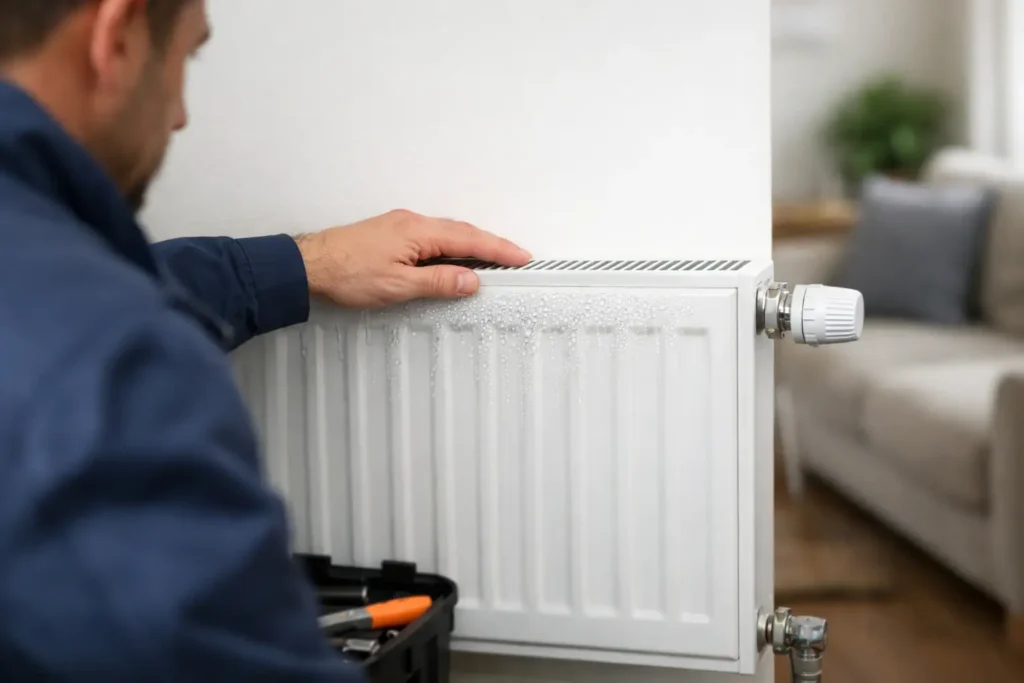
Next, feel the radiator carefully to work out where it is cold. Top, bottom, one side, or all over will help narrow down the likely cause. Also compare it with the other radiators in the building. If one is cold but the rest are fine, that usually points to a local issue. If several are underperforming, the problem may be wider.
If the radiator is cold at the top, bleeding it may help. Use a proper radiator key, keep a cloth ready, and release the air slowly until water appears, then close it again. Do not rush it, and do not keep going once water starts. If you are unsure, or if the bleed valve is old and looks worn, it is sensible to stop and get help rather than risk a leak.
You can also check whether the radiator valves are open. A TRV should be turned up to allow flow. The other valve may have a cap over it, but if it has been shut down in the past, that could be the reason the radiator is cold.
When not to force it
A common mistake is trying to free a stuck valve by using too much force. Old valves can seize, but forcing them can damage the valve body, cause leaks, or leave you with a more urgent repair than you started with.
The same applies if a bleed valve is rounded off, dripping, or does not close cleanly. What begins as a heating annoyance can quickly turn into water on the floor, damaged décor, or disruption in a tenanted or occupied property. For landlords, shops, cafés, and offices, that extra disruption is usually what costs the most.
Why is my radiator cold even after bleeding?
If you have bled the radiator and it is still cold, the issue is probably not trapped air alone. Sludge, a stuck valve, poor circulation, or system balancing are more likely.
A stuck TRV is especially common. Even if the valve head turns, the internal pin may remain jammed in the closed position. That stops hot water entering the radiator. This can often be sorted, but it needs a careful approach to avoid damaging the valve.
Sludge is another likely culprit, particularly if the radiator is patchy or cold near the bottom. If one radiator is badly affected, there is a fair chance others are beginning to suffer too. The heating may still work, but less efficiently, which means rooms take longer to warm up and the system has to work harder.
Balancing can also be the issue. In a system with several radiators, water naturally takes the easiest route. That means some radiators may heat quickly while others at the end of the run stay lukewarm or cold. Balancing adjusts the flow so that heat is shared more evenly across the property.
Problems in homes, rentals, and commercial buildings
A cold radiator is inconvenient in any property, but the impact depends on the setting.
In a family home, it usually means one room is uncomfortable and the rest of the house has to work harder to compensate. In a rental property, a heating issue can quickly become a tenant complaint, especially in colder months. In commercial spaces such as cafés, shops, schools, and offices, uneven heating can affect staff comfort, customer experience, and day-to-day operations.
That is why early action matters. A radiator that is partly blocked or not circulating properly is not just a comfort issue. It can be a sign that maintenance has been put off too long.
When to call a plumber
If you have checked the obvious and the radiator is still cold, it is time to get it looked at properly. The same applies if valves are leaking, bleeding does not help, several radiators are affected, or the problem keeps coming back.
A plumber can identify whether the fault is with the radiator itself, the valves, circulation, or build-up inside the system. From there, the fix might be as simple as freeing or replacing a valve, rebalancing the system, flushing a radiator, or recommending wider cleaning if there is clear sludge build-up.
What matters most is getting the right diagnosis rather than guessing. Replacing a radiator will not solve a circulation issue elsewhere, and repeated bleeding will not clear sludge from the bottom of the panel.
If you need help with a cold radiator in Hull, Beverley, Cottingham, Hessle, Anlaby, Willerby, Hornsea, Bridlington, or nearby areas, HJZ Plumbing can provide practical advice and reliable repair support. Call 01482 236483 or visit www.hjzplumbing.com to arrange a visit. Fixing it early is usually the quickest way to get the heat back on properly and avoid a bigger problem later.