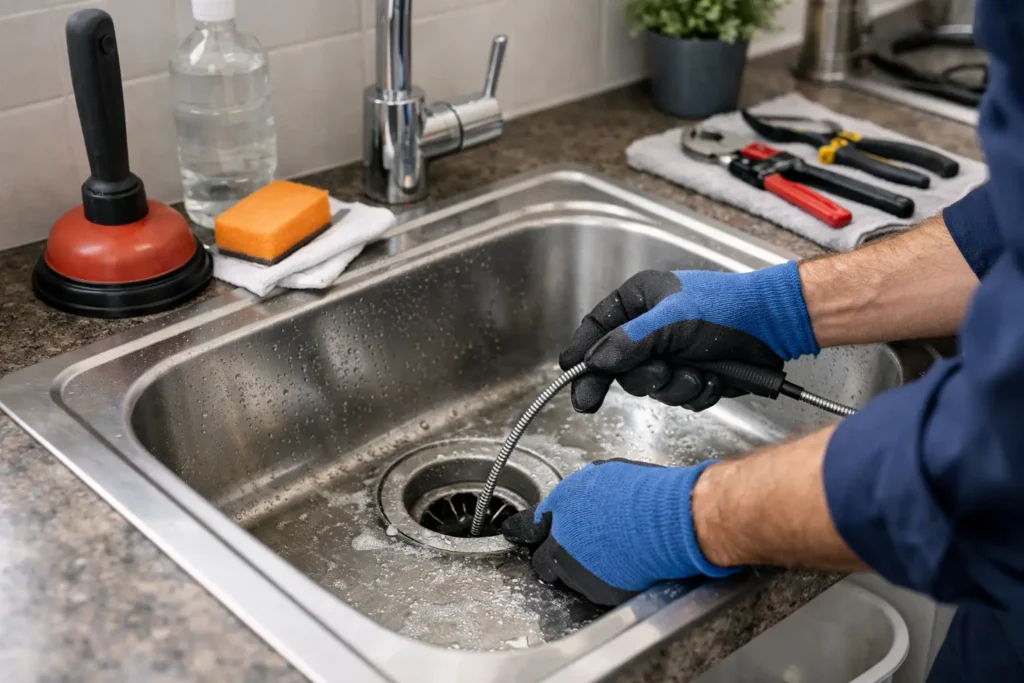
A kitchen sink usually gives you some warning before it blocks completely. Water starts draining more slowly, there is a stale smell coming up from the plughole, or the bowl fills faster than it empties when you wash up. If you need to unblock kitchen sink drain issues, acting early usually makes the job simpler and helps avoid overflow, leaks under the sink, and a much more unpleasant clean-up later.
Most kitchen sink blockages build up gradually. Grease, food scraps, coffee grounds, soap residue and bits of debris collect inside the waste pipe until water can no longer pass through properly. In homes, that is frustrating enough. In cafés, takeaways, offices and other occupied premises, it can quickly become a hygiene problem that disrupts normal use of the kitchen.
Why kitchen sink drains block so often
Kitchen waste pipes deal with more than water. Even careful households wash small amounts of oil, fat, sauces and food particles into the sink every day. Over time, those materials stick to the inside of the pipe and narrow the passage. Once the pipe is partly coated, more debris catches on it and the blockage gets worse.
There is not always one single cause. In some properties, the issue is poor habits such as pouring cooking fat down the sink. In others, the problem is pipework layout. Long horizontal runs, shallow pipe falls, old waste fittings or previous DIY alterations can all make a blockage more likely. That is why one sink might cope well for years while another blocks repeatedly.
If the sink backs up every few weeks, it is worth looking beyond the immediate blockage. Repeated symptoms often point to a deeper issue in the waste pipe, trap or outside drainage rather than something sitting right under the plughole.
First checks before you unblock kitchen sink drain pipework
Before you start, stop using the sink for a few minutes and see how quickly the water level changes. If water is draining very slowly, you may be dealing with a partial blockage. If it sits completely still, the obstruction is likely to be more solid or further along the line.
Check whether the blockage affects just the kitchen sink or other fittings too. If an outside gully is overflowing, or another sink or appliance waste is backing up at the same time, the problem may be further down the drainage system. In that case, forcing the issue with home remedies may not help much.
Also take a quick look in the cupboard under the sink. If there are signs of leaks, staining, damp smells or loose joints, be careful. Disturbing old pipework can turn a simple blockage into a leak that damages the cabinet, flooring or nearby wall.
The safest ways to clear a blocked kitchen sink
The best starting point is usually the simplest. Remove any visible debris from the plughole and clean the strainer or basket if one is fitted. Then try hot water, but only if the sink is draining at least a little. Very hot, not boiling, water can help soften grease deposits. It is not a cure for every blockage, but it can improve a minor build-up.
If that does not work, a plunger is often the next sensible step. Cover the overflow if your sink has one, add enough water to cover the plunger cup, and use firm, steady strokes. The aim is to shift the blockage with pressure, not to splash dirty water everywhere. A few controlled attempts are usually better than aggressive pumping.
If the sink still does not clear, the trap underneath may need attention. Place a bowl and towels underneath first, then carefully loosen the trap and empty it. Many kitchen blockages sit right there because the trap catches heavy debris and congealed grease. Clean it thoroughly, check the seals, and refit it properly before testing the sink again.
This is often effective, but it does depend on the condition of the pipework. Plastic traps are straightforward in many homes, while older fittings or cramped cupboards can be more awkward. If anything feels seized, brittle or poorly supported, it is better not to force it.
What to avoid when trying to unblock kitchen sink drain problems
It is tempting to reach for a strong chemical drain cleaner, especially when you want a quick fix. The problem is that chemical products do not always clear a blockage fully, and they can create other issues. They may sit in the pipe without shifting the obstruction, damage seals or older pipework, and leave dangerous liquid in the sink or trap for the next person who tries to take it apart.
Boiling water can also be risky in some situations. It may soften grease, but it can damage certain plastic fittings or seals if used carelessly. If your sink is fully blocked and holding water, pouring more water in often just makes the mess worse.
Improvised tools can cause problems too. Wire coat hangers, rigid rods and sharp objects may puncture, loosen or dislodge waste fittings under the sink. What starts as a blockage can then turn into a leak inside the cupboard, which is the sort of hidden damage people often do not notice until the unit is swollen and the floor is affected.
Signs the blockage is more serious than it looks
A slow-draining sink is not always just a local blockage. If bad smells keep returning even after cleaning, if the sink gulps loudly, or if water backs up when the washing machine or dishwasher empties, there may be a problem further along the shared waste line.
Recurring blockages are another warning sign. If you clear the sink and the same issue comes back soon after, the pipe may have a heavy grease build-up that basic home methods are only punching a small hole through. The water drains for a short time, then the remaining debris closes in again.
Commercial kitchens and busy rental properties need to take this seriously. A blocked sink affects hygiene, cleaning routines and normal use of the space. In a tenanted property, delay can also mean complaints, property damage and a larger repair bill if wastewater escapes.
When to call a plumber for a blocked kitchen sink
If you have tried the safe basics and the sink is still blocked, professional help is usually the fastest way to stop the issue dragging on. The same applies if there is standing dirty water, repeated smells, leaking joints, or signs the blockage is affecting more than one waste outlet.
A plumber can do more than just push through the obstruction. They can check whether the trap, waste pipe or outside drainage is contributing to the problem, and whether the layout under the sink is encouraging future blockages. That matters if you want a proper fix rather than another short-term clear-out.
For landlords, letting agents and business owners, calling early is often the more practical option. It reduces disruption, lowers the risk of water damage and helps protect kitchens that are used daily by tenants, staff or customers.
How to prevent the kitchen sink from blocking again
Prevention usually comes down to a few simple habits. Let cooking fat cool and put it in the bin rather than washing it away. Scrape plates and pans before rinsing them. Use a sink strainer to catch food waste, and rinse the sink through regularly with hot water after heavy use.
It also helps to be realistic about what home maintenance can and cannot do. If your sink blocks once after a lot of greasy cooking, that is one thing. If it blocks several times a year, there is probably an underlying issue worth addressing. A small adjustment to the waste pipework or a proper clean through can save a lot of repeat hassle.
In older properties and busy commercial premises, routine plumbing checks can make a real difference. Waste systems do not fail all at once. More often, they show smaller warning signs first, and dealing with them early is cheaper and far less disruptive.
If you need a blocked kitchen sink cleared properly, or you are dealing with repeat drainage problems in a home, rental property or business premises, contact HJZ Plumbing on 01482 236483 or through www.hjzplumbing.com. Clear advice and a prompt response can save a lot of mess, stress and unnecessary damage.