If your heating costs feel harder to control and you are weighing up long-term improvements to your property, this guide to air source heat pumps is a sensible place to start. For many homeowners and landlords, the main question is not whether the technology works – it does – but whether it will work well in their building, with their budget, and without causing avoidable disruption.
Air source heat pumps are becoming a more common option in UK homes and some commercial settings because they can provide heating and hot water with lower carbon emissions than older systems. They are not the right fit for every property, though. The best results usually come when the system is matched properly to the building and installed with the wider plumbing and heating setup in mind.
What air source heat pumps actually do
An air source heat pump takes heat from the outside air and uses it to warm your home and, in many cases, your hot water. That often surprises people because they assume cold outdoor air has no usable heat in it. In reality, there is still heat energy available even in lower temperatures, and the unit concentrates that heat and transfers it into your property.
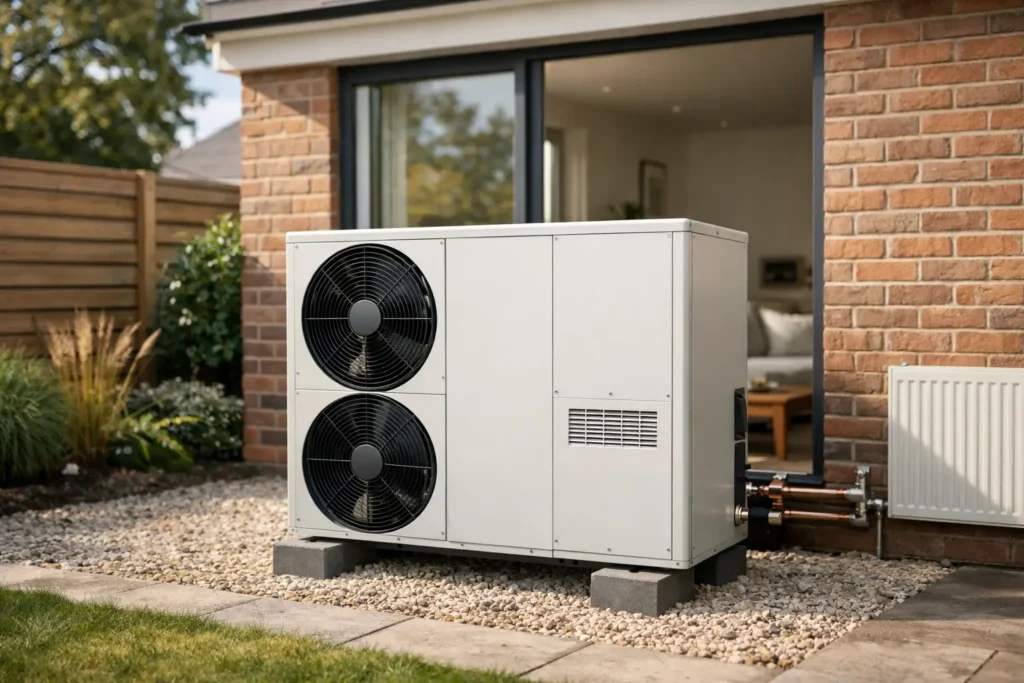
Most systems have an outdoor unit and indoor components that connect to your heating circuit. Rather than generating heat in the same way as a traditional system, a heat pump moves heat from one place to another. That makes it efficient, but it also means the property needs to be suited to lower temperature heating over longer periods.
A guide to air source heat pumps and property suitability
This is where a lot of buying decisions go right or wrong. A heat pump is not just a box fitted outside the house. Its performance depends heavily on insulation levels, heat loss, radiator sizing, hot water demand, and how the building is used day to day.
A well-insulated home with good windows and enough emitter surface area is usually a stronger candidate. If a property loses heat quickly through walls, roofs, draughts, or older glazing, the heat pump may still be possible, but the wider system may need work first. In some cases that means upgrading radiators. In others, it may mean improving insulation before installation makes financial sense.
For landlords and commercial operators, usage patterns matter too. A small office with steady daytime heating demand is different from a restaurant, school, or rental property with changing occupancy and higher hot water use. The right answer depends on the building, not just the headline promises on a brochure.
How efficient are air source heat pumps?
When installed correctly in the right property, air source heat pumps can be very efficient. They can deliver more heat energy than the electrical energy they consume, which is why they attract so much attention. That said, efficiency figures in the real world vary.
The system tends to perform best when it is not being asked to make up for a poorly insulated building or undersized radiators. If the setup is wrong, occupants may end up disappointed by room temperatures, running costs, or both. This is why proper assessment matters more than sales claims.
Another point worth knowing is that heat pumps generally work differently from systems people are used to. They often run for longer at a lower, steadier temperature rather than blasting out intense heat for short periods. Some households like that gentle consistency. Others need time to adjust their expectations.
Costs, savings, and where expectations need to stay realistic
The upfront installation cost of an air source heat pump is usually higher than many people expect. That can be a sticking point, especially if other upgrades are needed at the same time. Costs vary according to property size, existing pipework, cylinder requirements, controls, and any radiator changes.
Running costs are more complicated than simple sales messages suggest. Savings depend on electricity prices, the efficiency of the installed system, the condition of the property, and what you are replacing. In some homes, the numbers look attractive over time. In others, the financial case is less clear and may rest more on futureproofing, emissions reduction, or planned renovation work.
That does not make heat pumps a bad option. It simply means they need to be judged honestly. If someone promises universal savings without asking detailed questions about the building, that is a warning sign.
What to check before installation
Before moving ahead, ask for a full assessment of the property’s heat loss and existing heating system. This should not be rushed. A proper design process should look at room sizes, insulation, window quality, hot water demand, and whether the current emitters can work effectively with lower flow temperatures.
You should also think about practical installation details. The outdoor unit needs a suitable location with enough space and airflow. Noise levels are generally manageable, but positioning still matters, especially in tighter residential areas. Internally, there may be changes needed to pipework, hot water storage, and controls.
For occupied homes, rental properties, shops, or offices, disruption is another real consideration. Planned work always goes more smoothly when access, timescales, and the order of works are clear from the start. That is particularly important where tenants, customers, staff, or vulnerable occupants are involved.
Pros and cons of air source heat pumps
The main benefits are lower carbon emissions, strong efficiency potential, and a heating system that can work very well in the right building. They can be a good fit for newer homes, upgraded period properties, and projects where owners are already improving insulation and overall energy performance.
The trade-offs are just as important. Installation costs can be significant, and some properties need additional work before a heat pump becomes a practical choice. They also require careful system design. A poor installation or unrealistic recommendation can leave you with high costs and an underperforming system.
In plain terms, air source heat pumps are neither a miracle fix nor a fad. They are a useful option when the property and the heating design line up properly.
Common misunderstandings
One common misunderstanding is that a heat pump will automatically suit any home. Another is that it will deliver the same feel as a high-temperature system with no changes elsewhere. Both assumptions can lead to poor decisions.
People also sometimes focus only on the unit itself and overlook the rest of the plumbing and heating setup. Pipework condition, radiator capacity, controls, hot water arrangements, and general system health all influence performance. If those basics are neglected, the end result may fall short.
That is why practical, property-specific advice matters. Good planning prevents expensive corrections later.
Is an air source heat pump right for your property?
If you are renovating, improving insulation, replacing tired heating components, or planning long-term upgrades to a home or rental property, an air source heat pump may be worth serious consideration. If your property is older, draughty, or already struggling with uneven heat, the first step may be improving the building fabric and checking the heating distribution system rather than rushing straight to installation.
For commercial premises, the question is often about reliability, occupancy, and disruption as much as efficiency. A system that looks good on paper still has to work in the day-to-day reality of staff, customers, guests, or tenants.
The best approach is to look at the whole property honestly. What condition is the plumbing and heating system in now? Are there existing issues such as poor radiator performance, leaks, ageing pipework, or hot water limitations that need sorting first? These are not side issues. They are part of whether the wider project will succeed.
If you need practical advice on your property’s plumbing and heating setup before any upgrade work, HJZ Plumbing can help you make sense of what needs attention first. Whether you are dealing with ageing pipework, radiator problems, hot water concerns, or planned improvement work, call 01482 236483 or visit www.hjzplumbing.com to speak to a dependable local plumber who will give you clear, honest advice and tidy workmanship.