A cracked or repeatedly blocked drain can quickly become more than an inconvenience. Slow drainage, unpleasant smells, water backing up, damp patches and damage to floors or outside areas all need prompt attention. When weighing up pipe relining versus replacement, the right answer depends on the condition of the pipe, where the damage is and how long you need the repair to last.
For homeowners, landlords and businesses, the priority is usually clear: stop the problem properly without creating unnecessary mess, cost or disruption. A professional inspection helps establish whether a damaged pipe can be repaired internally or whether replacement is the safer long-term option.
What is pipe relining?
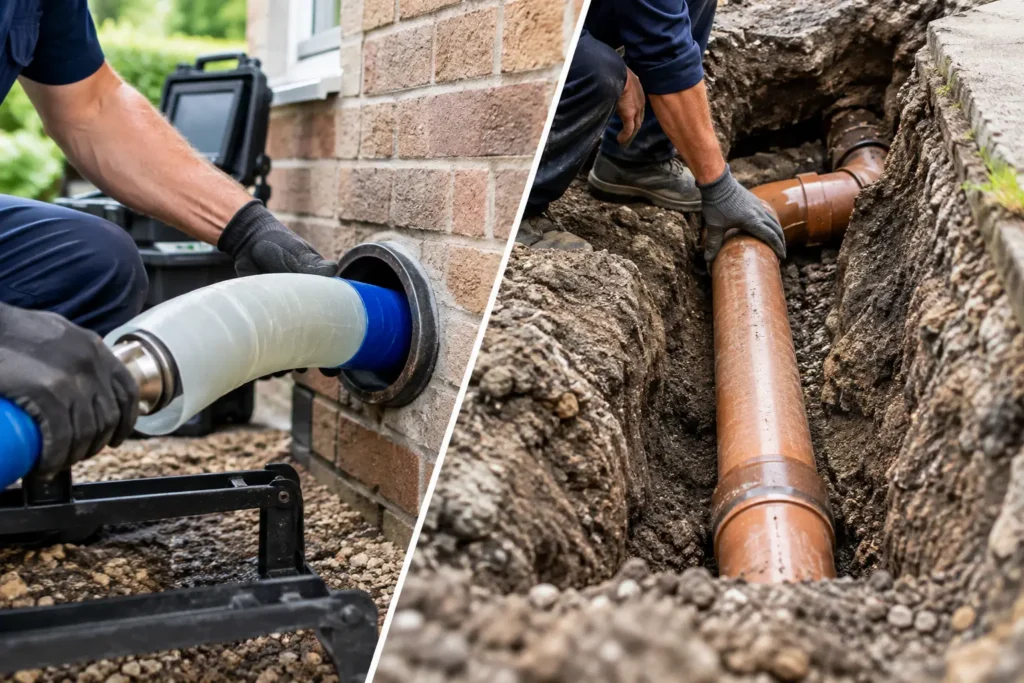
Pipe relining is a trenchless repair method used mainly for damaged drains and underground waste pipes. Rather than digging up and removing the existing pipe, a specialist liner is installed inside it. The liner is cured in place to create a new, smooth pipe within the old one.
It can be particularly useful where a drain runs beneath a driveway, patio, landscaped garden, extension or commercial floor. Digging in these areas may mean lifting paving, disturbing finished surfaces or interrupting trading. Relining can reduce that disruption considerably.
A relined pipe can help deal with cracks, small holes, leaking joints, root ingress and worn internal surfaces. It may also improve flow where the original pipe has become rough or damaged over time.
That said, relining is not a cure for every drainage fault. The existing pipe must still have enough structural shape and access for a liner to be installed correctly. If it has collapsed, badly shifted or has an unsuitable layout, replacement may be the better route.
What does pipe replacement involve?
Pipe replacement means removing the damaged section of pipe and fitting new pipework. For an underground drain, this often involves excavation to reach the fault. For internal plumbing pipework, it may involve opening up a wall, ceiling, floor or boxing to replace leaking or corroded sections.
This is more invasive than relining, but it gives a plumber direct access to the issue. A replacement allows badly damaged, crushed, collapsed or poorly installed pipework to be removed entirely. It can also correct problems with pipe fall, connections or the route of the drainage line that relining cannot change.
Where a pipe has reached the end of its working life, replacement can provide greater certainty. It is often the sensible choice when repeated repairs have already been made and the system is continuing to fail.
Pipe relining versus replacement: the main differences
The biggest difference is how the repair is carried out. Relining repairs from inside the pipe, while replacement removes and renews the damaged pipe itself. This affects cost, access, disruption and what problems can be fixed.
Relining may be less disruptive where access is difficult. If the pipe sits beneath a tiled floor, a shop entrance, a car park or a well-kept garden, avoiding excavation can save time and reduce reinstatement work. It can also be a practical option for occupied properties where digging would cause major disruption to tenants, customers, staff or family life.
Replacement is usually more suitable for serious structural faults. A pipe that has collapsed, dropped out of line, been crushed by ground movement or has large missing sections will not be made sound simply by lining it. In these cases, digging down and renewing the pipe is often the most reliable repair.
Cost is not always as straightforward as it first appears. Relining can have a higher specialist cost per metre, but it may avoid the expense of lifting and reinstating paving, flooring, roads or landscaping. Replacement materials may be less costly, yet labour, excavation, waste removal and making good afterwards can increase the overall bill. A proper assessment should look at the whole job, not just the pipe itself.
When relining may be the better option
Relining is often worth considering when a drainage survey shows cracks, leaking joints, root ingress or localised damage in a pipe that is otherwise stable. It can also be useful for older drains that have rough internal surfaces and are prone to catching debris.
For landlords and commercial property operators, reduced disruption can be a major advantage. A busy café, hotel, office or retail unit may not be able to close off a large area for excavation. Likewise, a homeowner may prefer to avoid lifting a recently completed driveway or patio where there is a suitable trenchless alternative.
Relining can be especially helpful when the fault is underneath a building. Excavation in this situation can involve substantial internal work, including removing flooring and reopening it once the pipe has been repaired. Whether relining is possible will depend on pipe access, its size, the extent of the damage and the route of the drain.
When replacement is the safer choice
Replacement is usually the right recommendation when the pipe is severely deformed, collapsed or has moved so far that waste water cannot flow correctly. A liner follows the existing pipe route, so it cannot correct a major dip, poor gradient or badly misaligned section.
It is also often preferable where there are several failures across the system, unsuitable pipe materials or previous poor-quality repairs. Patching one section may offer short-term relief, but it can be false economy if nearby sections are already failing.
For internal water pipes, replacement may be needed if corrosion, leaks or age have affected more than one area. Recurrent pinhole leaks, staining on ceilings, low water pressure and damp inside cupboards should not be ignored. The first visible leak is not always the only weakness in the pipework.
Start with the cause, not the repair method
The best way to choose between relining and replacement is to identify exactly what has gone wrong. A drain camera survey can show cracks, blockages, root ingress, displaced joints and collapses without guessing. For plumbing leaks, a careful inspection can help trace the source and assess the surrounding pipework.
This matters because symptoms can be misleading. A blocked toilet or slow sink might be caused by a simple obstruction, not a damaged drain. Equally, repeatedly clearing a blockage without addressing root intrusion or a collapsed section can leave the underlying problem untouched.
A trustworthy plumber should explain what has been found, what options are realistic and why one repair is more suitable than another. You should be told about likely disruption, any access requirements and whether there is a risk of further work once the pipe is exposed. Clear advice helps you make a practical decision rather than paying for a quick fix that does not last.
Protecting your property while you decide
If you have signs of a drainage or pipe fault, acting early can limit damage. Avoid putting wipes, fats, food waste or sanitary items down drains, and keep people away from any area where water is backing up. If sewage is overflowing, a pipe is leaking heavily or water is affecting electrics, floors or ceilings, treat it as urgent.
Landlords and property managers should also respond quickly where tenants report recurring blockages, odours or damp. Delays can lead to hygiene concerns, damaged finishes and greater disruption for everyone in the property. For businesses, an unresolved drainage issue can affect customer confidence as well as daily operations.
The right repair is the one that fixes the actual fault, protects the property and makes sense for its condition and use. For clear, honest advice on a leak, blocked drain or damaged pipe in Hull and the surrounding area, contact HJZ Plumbing on 01482 236483.