A bathroom basin that drains slowly can quickly become a daily frustration. Water pools around the plughole, toothpaste and soap residue build up, and before long the basin may stop draining altogether. Knowing how to unblock bathroom basin waste safely can often solve a minor blockage quickly – but forcing the problem or using harsh products can damage pipework and leave you with a leak as well as a blocked drain.
Most basin blockages are caused by ordinary day-to-day use. Hair, soap scum, shaving foam, toothpaste, make-up, and limescale collect around the plug mechanism and inside the waste trap beneath the basin. The good news is that these are usually accessible without taking apart the whole bathroom.
Before you unblock a bathroom basin
Start by checking whether the water is draining slowly or not moving at all. A slow drain often points to a build-up close to the plughole. If the basin is completely full, the blockage may be further down the waste pipe, particularly if other fittings nearby are also draining poorly.
Remove any standing water with a jug or small container before you begin. Put old towels around the base of the basin unit or pedestal, and keep a bucket close by. This protects flooring and makes it easier to deal with any water released when you clean the trap.
Do not pour more chemicals into the basin if you have already used a drain cleaner. Chemical products can splash when you remove the trap or use a plunger, causing burns to skin and damage to surfaces. If you are unsure what has gone down the drain, wear gloves and call a plumber rather than taking risks.
How to unblock bathroom basin waste step by step
Clear the plughole and lift out hair
The quickest fix is often at the top of the basin. Pull out the plug if it lifts free, then use gloves, tweezers, or a plastic drain hook to remove visible hair and residue from around the plughole. It is not a pleasant job, but this compact layer of hair and soap is commonly the cause of a slow-draining basin.
Many bathroom basins have a pop-up plug operated by a lever behind the tap. If yours does not lift out easily, avoid pulling hard. The linkage underneath may need loosening first, and forcing it can bend the mechanism or damage the fitting.
Once the visible debris has been removed, run warm water into the basin. Avoid using boiling water, especially where plastic waste pipes are fitted. Very hot water can soften or distort some plastic components. Warm water with a small amount of washing-up liquid may help rinse away fresh soap residue after the plughole has been cleared.
Use a basin plunger correctly
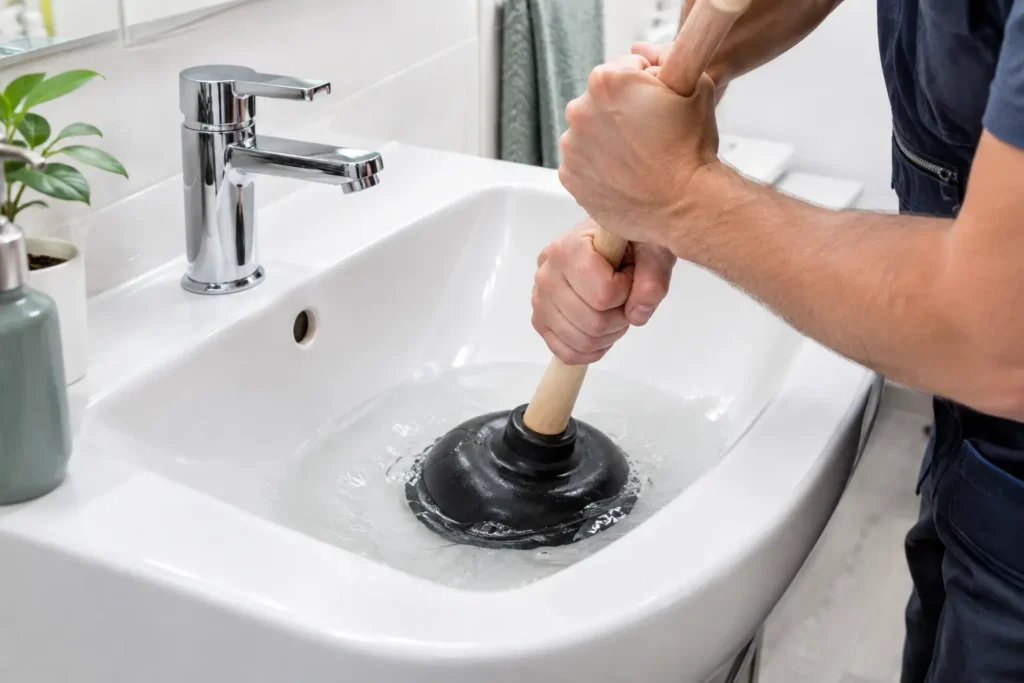
A small cup plunger can shift a blockage sitting just beyond the plughole. For it to work, you need a proper seal over the drain. Fill the basin with enough water to cover the rubber cup, then place a damp cloth firmly over the overflow opening. The overflow is usually a small hole near the top of the basin bowl, and covering it stops pressure escaping.
Pump the plunger steadily 10 to 15 times, keeping the seal in place, then lift it away and check the flow. Repeat once or twice if needed. There is no benefit in aggressive plunging, which can loosen old waste connections beneath the basin.
If the water starts moving but the basin still drains slowly, the blockage may be breaking up. Run warm water for a minute and reassess. If it backs up again, it is time to clean the trap.
Clean the waste trap beneath the basin
The waste trap is the curved section of pipe directly below the basin. It holds a small amount of water to prevent drain odours entering the room, but it also catches hair, sludge, and small objects such as rings or toothpaste caps.
Place a bucket directly beneath the trap and loosen the fittings by hand. On many modern plastic traps, the threaded nuts can be undone without tools. Water and debris will come out, so keep the bucket steady and have a cloth ready.
Empty the trap, remove the build-up, and rinse it with warm water. Check the rubber washers are clean and sitting correctly before putting it back together. Tighten the connections by hand until snug. Overtightening can damage plastic threads or distort a washer, leading to a slow leak later.
Run water through the basin while checking each joint underneath. If you see drips, carefully tighten the relevant fitting a little more. A dry tissue held against the joint is useful for spotting a small leak that is not immediately obvious.
Use a drain snake with care
If the trap is clear but the basin is still blocked, the obstruction may be further along the waste pipe. A flexible plastic drain snake can reach into the pipe and pull back hair or compacted residue. Feed it in gently, rotate it if required, and withdraw it slowly.
Do not force a metal rod, wire coat hanger, or screwdriver down the pipe. These can scratch pipework, dislodge joints, or simply push the blockage further away where it becomes harder to remove. This is particularly relevant in rental properties and commercial washrooms, where repeated quick fixes can create a more disruptive maintenance issue.
What not to put down a bathroom basin
Prevention is much easier than dealing with a fully blocked basin. Bathroom waste pipes are narrow, and products that seem harmless can cling to the inside of the pipe over time. Keep the following out of the basin where possible:
- Hair from shaving, brushing, or grooming
- Cotton buds, dental floss, wipes, and facial pads
- Thick creams, waxes, and make-up wipes
- Paint water, plaster residue, or DIY debris
A simple plughole hair catcher can make a real difference in busy household bathrooms, guest bathrooms, salons, hotel rooms, and staff washrooms. Clean it regularly rather than waiting for water to begin draining slowly.
When a blocked basin needs a plumber
A straightforward hair blockage is often manageable, but some signs suggest that the issue is deeper in the drainage system. Call for professional help if the basin repeatedly blocks after cleaning, water comes back up through another fitting, there is a persistent foul smell, or you notice leaking from the pipework beneath the sink.
You should also arrange a plumber promptly if a blockage affects a tenant, customer toilet, café washroom, office facility, or school. A basin out of use may seem minor, but poor drainage and unpleasant odours can quickly become a hygiene concern and disrupt normal use of the property.
Repeated blockages are worth investigating properly. The cause could be poor pipe falls, an incorrectly fitted trap, limescale, a damaged waste pipe, or a larger obstruction further along the run. Clearing the surface debris alone may provide temporary relief, but it will not correct the underlying fault.
HJZ Plumbing provides practical drain cleaning and plumbing repairs for homes and occupied properties across Hull and the surrounding area. A tidy inspection and the right equipment can clear the blockage without unnecessary disruption, while identifying leaks or pipe issues before they cause water damage.
If your basin will not clear, is leaking underneath, or keeps blocking, do not keep forcing it. Contact HJZ Plumbing directly on 01482 236483 for clear advice and reliable local help.