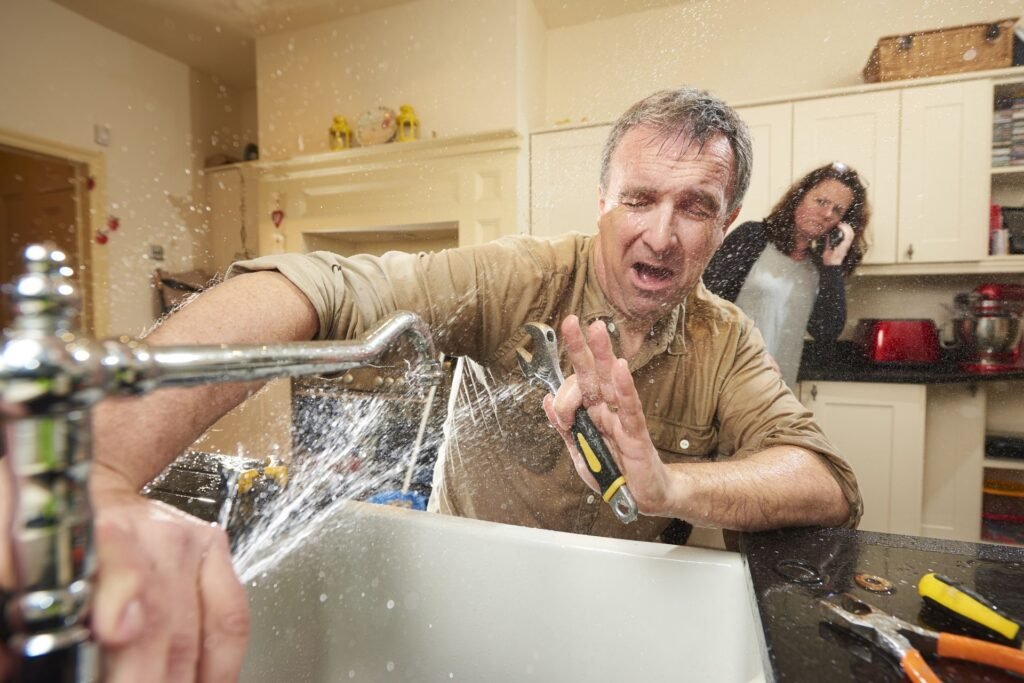
A Beverley rental leak example shows why a small report from a tenant should never be left until the next routine visit. Water had started appearing on the kitchen floor beneath a sink unit in a rented property. At first, it looked like a minor spill. By the time the tenant checked again later that day, the cupboard base was swollen, cleaning products were damp and water had begun tracking towards the adjoining wall.
For a landlord or letting agent, this is the point where a simple plumbing fault can become a repair to cupboards, flooring, plaster and decoration. For the tenant, it is a disruption to normal life and a genuine worry about whether they can safely use the kitchen. Acting quickly protects the property, keeps communication clear and gives everyone confidence that the problem is being dealt with properly.
What happened in this Beverley rental leak example
The tenant did the right thing by reporting the issue as soon as they noticed repeated water under the sink. They avoided using the affected cupboard, removed their stored items and sent clear photographs to the managing agent. The agent arranged for the leak to be assessed promptly rather than assuming it was condensation or a loose bottle of washing-up liquid.
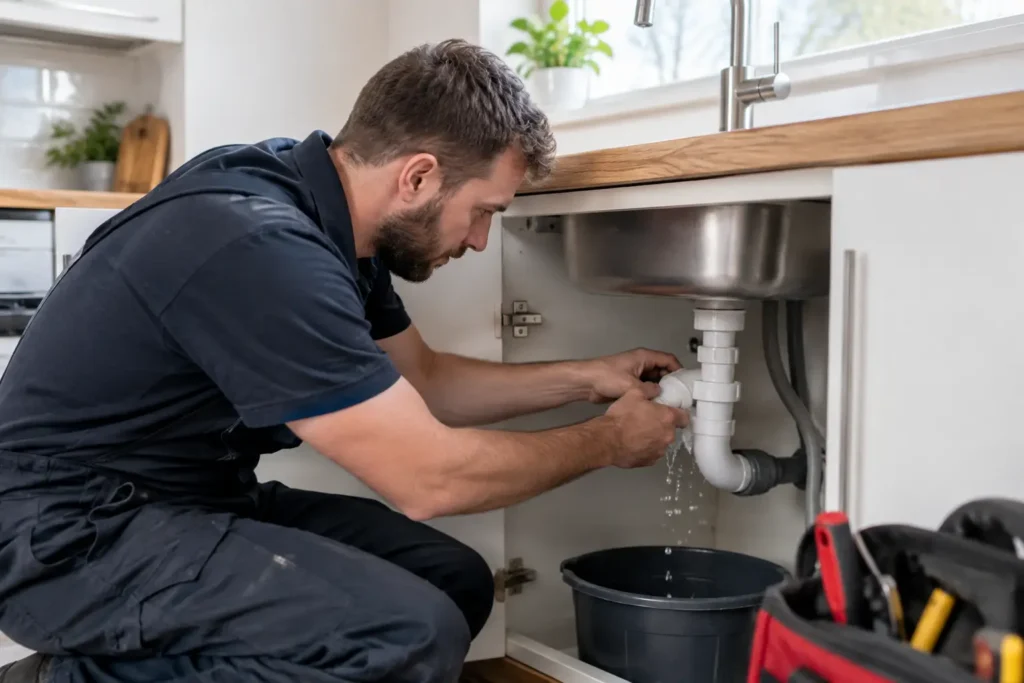
On inspection, the leak was traced to a worn connection on the waste pipework. The joint was only leaking when the sink was emptied, which explained why the cupboard could appear dry at some times of day. This is common in rental homes: a fault may be hidden during a quick visual check, then show itself when a dishwasher drains, a tap runs for longer, or a sink is emptied after washing up.
The immediate priority was to stop further water reaching the cabinet and wall. The affected section was isolated, the failed fitting was replaced and the connections were tested under normal use. The area was then checked for signs that water had travelled beyond the obvious source. A tidy repair is not just about replacing a part. It means checking that the issue has genuinely stopped and leaving the tenant with a usable, safe kitchen.
Why rental property leaks need a faster response
A dripping connection can waste surprisingly little water at first, but the damage it causes is rarely small. Kitchen units are particularly vulnerable because chipboard and MDF absorb moisture quickly. Once they swell or soften, drying them out does not always restore their strength or finish.
There is also the question of who is affected. A homeowner can decide to put a bowl under a slow drip for a day or two, although it is still not advisable. In a rental property, the tenant may be unable to use an essential fitting properly, may worry about being blamed for damage, and may have no access to the stop tap or information on what to do next. Clear action from the landlord or agent matters.
Commercial rentals can be even more time-sensitive. A leak beneath a staff sink in a café, office, shop or school can create a slip risk, affect hygiene and disrupt trading or daily operations. The source might be small, but the consequences of delaying a repair can be costly.
The right first steps for tenants, landlords and agents
The best response depends on the severity of the leak, but a few practical actions help prevent the situation getting worse. If water is flowing steadily or spreading across the floor, stop using the affected appliance or fitting and turn off the local isolation valve if it is safe and accessible. If that does not stop the water, the property’s main water supply may need to be turned off.
Tenants should report the issue straight away, including where the water is appearing, when it happens and whether it is getting worse. Photos and a short video can be useful, especially where the leak only appears while a tap, shower, toilet or appliance is in use. They should not dismantle pipework or attempt a temporary repair with tape or sealant. That can make diagnosis harder and may create a larger leak later.
Landlords and managing agents should acknowledge the report quickly and explain what will happen next. Even when a leak looks minor, arranging a timely visit is usually the sensible option. A plumber can identify whether the problem is coming from a supply pipe, waste connection, appliance hose, failed seal, overflow or a fault elsewhere nearby.
Good communication also avoids unnecessary friction. The tenant needs to know whether they should avoid using a sink, shower, toilet or washing machine. The owner needs an honest view of the repair required, any visible damage and whether further drying or remedial work is likely to be needed.
Finding the source without guessing
Water does not always appear directly below the fault. A leak under a bath may show through a kitchen ceiling. A loose toilet pan connector can dampen flooring around the base of a toilet, while a faulty shower seal may allow water into the wall only when somebody is showering. In some cases, a blocked waste pipe causes water to back up and escape from a connection that would otherwise have held.
That is why a proper inspection matters. The plumber should ask when the leak occurs, inspect accessible pipework and run the affected fittings in a controlled way. They may check hot and cold feeds separately, fill and drain basins, flush the toilet more than once, or inspect appliance connections. The aim is to identify the actual failed component rather than simply dry the area and hope it does not return.
In this example, testing the sink waste while the tap was running and again while the bowl was emptied confirmed the fault at the connection. Replacing only the visible seal without checking the alignment and condition of the pipework could have left the tenant facing the same problem a few days later.
Repair versus replacement in a rented home
Not every leak requires a major replacement. A damaged washer, trap, flexible hose, compression fitting or section of waste pipe can often be repaired efficiently. This can be the right answer when the wider installation is sound and the repair can be made securely.
However, there are times when replacement is better value. Repeated leaks from old pipework, badly fitted connections, corroded fittings or a poorly supported basin waste system can mean several callouts and ongoing inconvenience. Replacing the affected section properly may cost more initially, but it can prevent repeat tenant reports and reduce the risk of further property damage.
A practical plumber should explain the options clearly. Landlords need to know what has failed, why it failed, what repair is recommended and whether there are any related issues worth addressing while access is available. The answer is not always the most extensive work. It depends on the condition of the installation, the risk of recurrence and the potential consequences if it leaks again.
Preventing repeat leaks between tenancies
A property inspection before a new tenancy is a useful opportunity to catch small plumbing issues before they become an emergency. Running taps, checking under sinks, flushing toilets, looking for slow-draining wastes and testing showers can reveal faults that are easily missed when a property is empty.
Pay particular attention to kitchen sink units, bathroom basin traps, toilet connections, washing machine hoses and pipework around appliances. Look for staining, swollen cabinet bases, mildew, loose fittings and signs of old drips. A musty smell inside a cupboard should also be investigated rather than covered up with cleaning products.
For occupied properties, encourage tenants to report changes early. A slow drip, a gurgling drain, a toilet that rocks slightly, reduced water flow or a shower screen seal that is no longer holding water are all worth dealing with before they affect the building fabric. Early repairs are usually simpler, cleaner and less disruptive.
A practical response protects everyone
The lesson from this Beverley rental leak example is not that every damp patch signals a serious disaster. Often, the repair itself is straightforward. The risk comes from assuming it can wait, failing to investigate the source or leaving a tenant without clear instructions.
Prompt action protects the tenant’s home, the landlord’s investment and the condition of the property. It also reduces the chance of avoidable claims, complaints and expensive remedial work after water has had time to spread. For reliable help with rental property leaks, plumbing repairs or urgent water issues in Beverley and the surrounding area, contact HJZ Plumbing directly on 01482 236483.