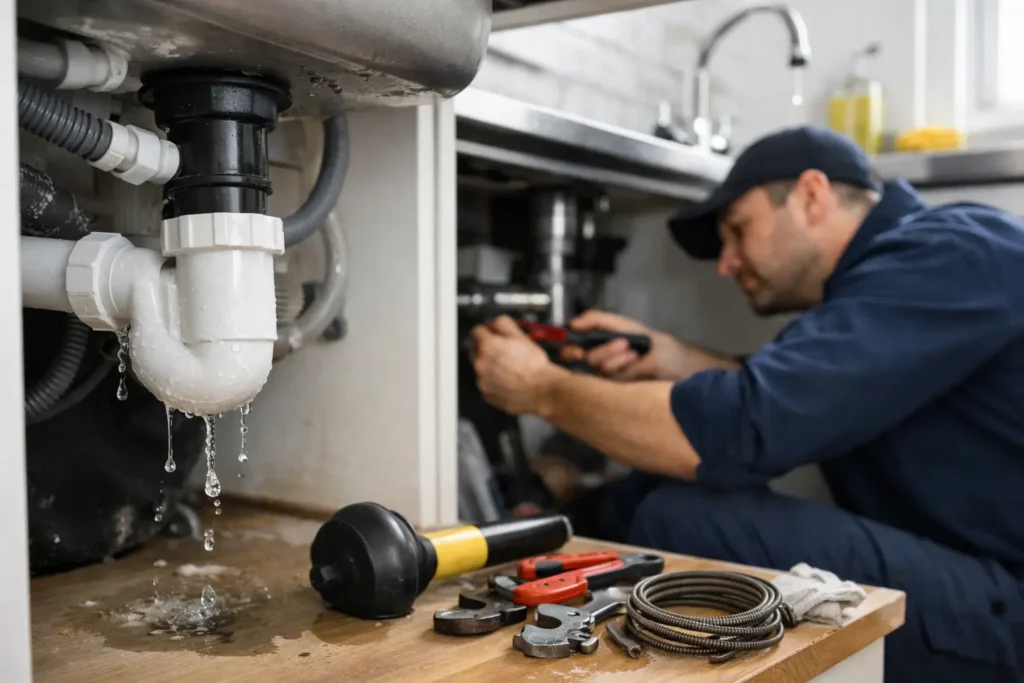
A kitchen sink that will not drain, a cupboard that feels damp, or a tap that will not stop dripping can quickly disrupt the whole property. Kitchen sink plumbing Beverley customers need is often less about a major installation and more about finding the real cause early, before dirty water, damaged units or an unusable kitchen create a bigger problem.
For a homeowner, that might mean avoiding damage to a recently fitted kitchen. For a landlord or letting agent, it can mean resolving a tenant issue before it becomes a complaint or insurance matter. In cafés, restaurants and other busy premises, a blocked or leaking sink can affect hygiene, food preparation and normal trading. A practical repair, carried out promptly, is usually the safest and most cost-effective route.
Common kitchen sink plumbing problems in Beverley
Kitchen sinks deal with more than water. Grease, food scraps, coffee grounds, detergent residue and loose items can all find their way into the waste pipe. Over time, this build-up narrows the pipework and slows the flow of water. The problem may begin as an occasional gurgle, then progress to a sink that takes several minutes to empty or backs up completely.
A blockage is not always directly beneath the plughole. It could be in the trap, further along the waste pipe, or connected to a wider drainage issue. Pouring repeated doses of harsh chemical cleaner into the sink is rarely a dependable solution. It can fail to shift the obstruction, splash back during use and, in some cases, put older pipework or seals under unnecessary strain. If the blockage keeps returning, the source needs dealing with rather than temporarily masking.
Leaks are another frequent issue. Water can escape from a worn trap seal, a loose compression fitting, a split flexible hose, a faulty waste connection or around the sink itself. Because much of this plumbing is hidden inside a cupboard, a slow leak can go unnoticed until the baseboard swells, stored items become damp or there is a musty smell. A small amount of water every time the sink is used adds up quickly.
Dripping or stiff taps also deserve attention. A drip may be caused by a worn internal part, while poor water flow can point to a blocked aerator, a failing tap mechanism or an isolation valve issue. Replacing a tap can be sensible when it is old, damaged or no longer suits the kitchen, but it is worth checking the supply connections and condition of the surrounding pipework at the same time. A new fitting will not solve a leak elsewhere under the sink.
What to do when water is leaking or backing up
If water is escaping under the sink, stop using the tap and dishwasher or washing machine connected nearby until the issue is clear. Remove household products, food or cleaning supplies from the cupboard so they do not become damaged, then place a bowl or towels beneath the leak if it is safe to do so. Avoid tightening fittings aggressively. A connection that seems loose may have a damaged seal or cracked component, and forcing it can make the leak worse.
Most sinks have small isolation valves on the hot and cold supply pipes. Turning these off can stop water reaching the tap while allowing the rest of the property to retain its supply. If there is no isolation valve, it is seized, or water is coming through rapidly, turn off the main stop tap if you know where it is and can access it safely. Landlords and business managers should make sure staff or tenants know the stop tap location before an emergency happens.
For a blocked sink, do not keep filling the bowl to test it. If wastewater is rising towards the overflow or spilling onto the worktop, stop and protect the surrounding area. Do not use the dishwasher if it drains through the same waste line. Food-contaminated water inside a kitchen cupboard is unpleasant at home and a hygiene concern in commercial premises, so a fast response can prevent unnecessary disruption.
Why the same fault keeps coming back
Repeated sink problems usually have an underlying reason. In domestic kitchens, grease and food waste are common causes, particularly where a sink is used heavily and the waste pipe has a shallow fall. In rental properties, a blockage may return because the pipe has not been fully cleared or because several occupants are using the kitchen differently. Clear advice after the repair can help reduce repeat callouts.
In commercial kitchens, the demand on the system is often much higher. A café, takeaway or restaurant may need a more thorough inspection of the waste run, traps and connected appliances. The priority is not only to get water moving again but to identify whether the installation is coping with normal use. Closing a kitchen area for a recurring drainage fault costs time, affects staff and can inconvenience customers.
There are also occasions when the sink itself is the issue. A corroded waste, poor seal around the plughole, cracked ceramic, damaged stainless steel or unstable bowl can allow water through where it should not be. If units are already swollen or mould is forming, simply resealing the visible edge is not always enough. The affected plumbing and surrounding materials need checking carefully so the repair lasts.
Kitchen sink plumbing repairs that protect your property
The right repair depends on the fault, the age of the installation and the condition of the materials already in place. Clearing a straightforward blockage may only require cleaning the trap and removing debris from the waste pipe. A more persistent blockage may need drain cleaning equipment to clear the line properly. The important point is to confirm that water is flowing away freely before the job is finished.
For leaks, replacing a washer or seal can sometimes be enough. However, brittle plastic traps, corroded fittings or poorly supported pipes are better replaced than repeatedly patched. This is particularly true in occupied rental homes and business premises, where another leak can mean further access arrangements, disruption and damage to stock, flooring or kitchen units.
Planned kitchen work is a good opportunity to improve reliability too. Whether you are fitting a new sink, changing a tap, installing a dishwasher connection or renovating the kitchen, pipework should be tidy, securely supported and accessible for future maintenance. Good installation work is not just about how it looks on the day. It should allow the sink to drain properly and make future isolation or repairs less stressful.
Simple habits that help prevent blockages
No kitchen sink will stay trouble-free forever, but a few sensible habits make a real difference. Scrape food into the bin before washing plates, and allow cooking fat to cool before disposing of it rather than washing it down the sink. Coffee grounds, rice, pasta and fibrous vegetable peelings are all more likely to contribute to a blockage than many people expect.
Use a sink strainer where appropriate and empty it regularly. Running hot water after washing up can help move light residue through the pipe, but it will not clear an established grease blockage. If your sink begins draining slowly, smells unpleasant or gurgles, arrange help before it becomes a full backup. Early attention is usually cleaner, quicker and less disruptive.
When to call a local plumber
A minor drip may appear manageable, but there is a clear point at which professional help is the safer choice. Call for assistance when water is leaking into cupboards or through ceilings, the sink repeatedly blocks, unpleasant smells persist, the tap will not isolate, or more than one appliance is struggling to drain. These signs can point to a fault beyond the part you can see.
For landlords, letting agents and commercial operators, prompt repairs also show tenants, staff and customers that the property is being looked after. Clear communication, tidy work and an honest explanation of the repair matter just as much as getting the water flowing again.
If your kitchen sink is leaking, blocked or causing disruption in Beverley, do not wait for water damage or hygiene concerns to grow. Contact HJZ Plumbing directly on 01482 236483 or through the HJZ Plumbing website for practical, dependable help.