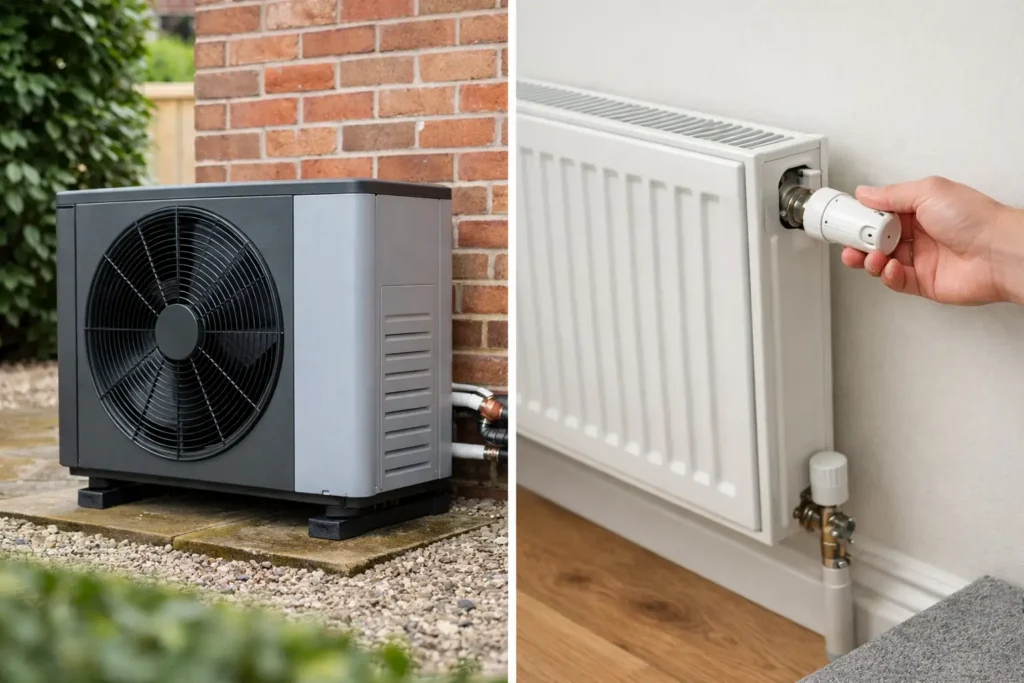
A heat pump and radiators are not usually an either-or decision. A heat pump provides the heat, while radiators release that heat into each room. The real question is whether your existing radiators, pipework and controls can deliver enough warmth at the lower water temperatures a heat pump often uses.
For homeowners, landlords and property managers, getting this right before work begins matters. An undersized radiator can leave a bedroom chilly, a poorly balanced system can create cold spots, and rushed changes can cause unnecessary disruption in an occupied property. A proper assessment helps you spend money where it will make a genuine difference.
Heat pump or radiators: understand the difference
A traditional wet central heating system sends hot water around radiators. With a heat pump, the water flowing through the system is commonly cooler than in many older systems. It works steadily over longer periods rather than relying on short bursts of very hot water.
That lower flow temperature is good for efficiency, but it changes what radiators need to do. A radiator that keeps a room warm with very hot water may not give out enough heat when supplied at a lower temperature. This does not mean every radiator must be replaced. It means their output needs to be checked against the heat each room loses.
Think of it as matching the whole system. The heat pump must be correctly sized, the home needs to retain heat reasonably well, and the radiators need enough surface area to warm each room comfortably. One weak part can affect the result.
Can you keep existing radiators with a heat pump?
In many properties, yes. Larger modern radiators may already be suitable, particularly in well-insulated rooms. Some homes only need changes in the coldest spaces, such as a north-facing lounge, an older extension, a bathroom or a room with large windows.
Older, smaller radiators are more likely to need upgrading. Replacing one with a larger panel radiator, a double-panel model or a radiator with more convector fins can increase heat output without radically changing the room. The aim is not simply to fit the biggest radiator possible. It is to fit the right radiator for the room and the planned system temperature.
A room-by-room heat-loss calculation is the sensible starting point. This considers the size of the room, external walls, windows, insulation, ventilation and how the space is used. A rarely used spare room has different needs from a family living room, hotel reception or busy office.
Before any decision is made, existing radiators should also be checked for performance. A radiator that is cold at the bottom, hot at the top or warm only at one end may be suffering from sludge, trapped air, poor balancing or a faulty valve. Replacing it without addressing the underlying issue can waste money.
Why system condition matters before changing radiators
The condition of the pipework and radiators has a major effect on heating performance. Over time, internal corrosion and debris can settle inside the system. This often shows up as cold patches, slow warm-up times, noisy circulation or radiators that never feel properly hot.
A professional power flush may be appropriate where sludge is affecting several radiators or where water quality is poor. In other cases, targeted cleaning, valve replacement and balancing may be enough. The right approach depends on the system rather than a one-size-fits-all recommendation.
Thermostatic radiator valves are worth reviewing too. They allow rooms to be controlled individually, helping avoid overheating unused spaces. A sticking or damaged valve can make a room difficult to regulate, while an old manual valve gives less control over daily comfort.
For landlords and commercial premises, this work is particularly valuable between tenancies, during refurbishment or before winter demand starts. Addressing poor radiator performance early can reduce tenant complaints, avoid disruption to customers and staff, and protect the condition of the property.
When bigger radiators are the practical answer
Larger radiators are often the most straightforward way to make a wet heating system work effectively at lower temperatures. They offer more surface area, so they can give out the required heat without needing the water to be excessively hot.
This is often easier than moving pipework or changing the layout of a room. However, practical details still matter. A larger radiator needs suitable wall space, secure fixings and pipework that can be adapted neatly. In a hallway, kitchen or compact bedroom, the available space may shape the best option.
Vertical radiators can help where wall width is limited, though their heat output should always be checked rather than chosen for appearance alone. In bathrooms, towel radiators can be attractive and useful, but they are sometimes too small to heat the whole room at lower temperatures. An additional radiator may be needed, especially in a large or poorly insulated bathroom.
Underfloor heating is another option for some ground-floor renovations and extensions. It works well at lower temperatures because the heating area is much larger, but it is not always practical in an existing occupied home. Lifting floors, altering doors and allowing for installation time can make radiator upgrades the less disruptive choice.
Do not overlook insulation and draughts
No radiator upgrade can fully compensate for a home that loses heat quickly. If a room is draughty, has poor loft insulation, single glazing or uninsulated external walls, it may require much more heat than expected.
This does not mean every energy-efficiency improvement must happen before considering a heat pump. It does mean that insulation and draught-proofing should be part of the wider plan. Improving the building fabric can reduce the size of radiator upgrades needed and make the finished system more comfortable to run.
Small practical improvements count. Sealing obvious draughts, ensuring loft insulation is up to standard and fitting suitable window coverings can improve comfort noticeably. A room that holds its heat needs less from every part of the heating system.
Planning work in an occupied property
Radiator changes are usually manageable with good preparation, but they should be planned around the people using the building. Furniture may need moving, floors should be protected, and the heating system may need to be drained down while work is carried out.
For a family home, it is sensible to schedule larger changes outside the coldest spell where possible. For a rental property, clear communication with tenants helps avoid frustration and gives time for access to be arranged. Restaurants, cafés, hotels, schools and offices may need work completed around service hours, term times or quieter trading periods.
Tidy workmanship matters as much as the technical work. Radiators are visible fixtures in almost every room, so pipework alterations, wall repairs and final testing should be carried out carefully. Once the system is refilled, each radiator should be checked, balanced and left heating as it should.
A practical way to make the decision
Start with the rooms that are already causing problems. If the lounge never feels warm, the bathroom is cold after a shower or tenants regularly complain about a back bedroom, those spaces need attention first. Check whether the radiator is faulty or restricted before assuming it needs replacement.
Then look at the property as a whole. A heat-loss assessment will show where existing radiators are adequate and where increased output is needed. This gives you a clearer budget and avoids replacing perfectly serviceable radiators simply because they look old.
For many properties, the best outcome is a combination of careful radiator upgrades, clean and balanced pipework, working controls and sensible improvements to insulation. It is a practical route to better comfort without making unnecessary changes.
If your radiators are cold, noisy, leaking or no longer keeping rooms warm, do not wait for the problem to become more disruptive. For clear advice and tidy radiator repairs, replacements or system improvements across Hull and East Yorkshire, contact HJZ Plumbing on 01482 236483 or through www.hjzplumbing.com.