A new kitchen can look finished long before the plumbing has been properly tested. A sink that drains slowly, a dishwasher connection that drips behind a cabinet, or pipework forced into an awkward space can quickly turn an exciting refit into a costly disruption. Booking the right plumber for a kitchen refit early gives the whole project a better chance of running to plan.
Kitchen plumbing is not just about fitting a tap at the end. It involves bringing water supplies, waste pipes and appliance connections together safely, neatly and in the right order, while allowing kitchen fitters, electricians and decorators to complete their own work. Good planning reduces last-minute changes, protects new units from water damage and helps you get a kitchen that works as well as it looks.
Why kitchen plumbing needs planning before units go in
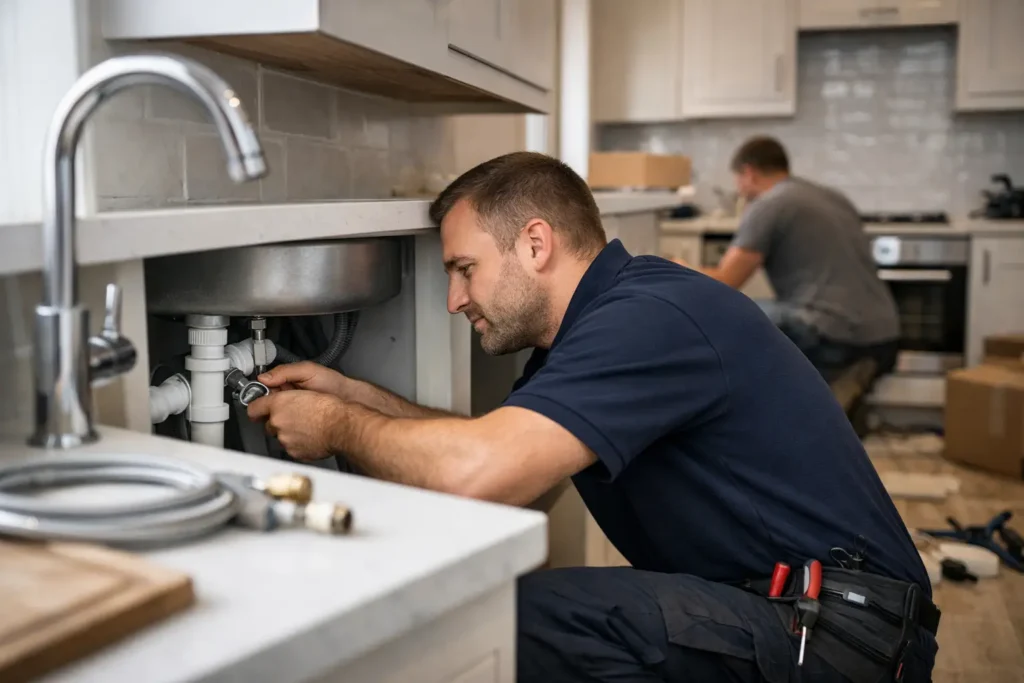
The visible parts of a kitchen – the sink, tap and appliances – are only one part of the job. Behind the units, there needs to be enough room for pipework, valves, traps and waste connections without crushing hoses or creating sharp bends that are difficult to maintain later.
Moving a sink across the room, for example, may be possible, but it depends on the route available for the waste pipe. Waste water needs a suitable fall to drain properly. If the pipe run is too long, too flat or packed with unnecessary bends, you may be left with slow drainage, unpleasant smells or repeated blockages. It is much easier to assess this before cupboards, worktops and flooring are installed.
Water supplies also need careful thought. Isolation valves should remain accessible, particularly for sinks, dishwashers, washing machines and fridge water connections where fitted. If a leak develops, being able to isolate that one appliance quickly can prevent water spreading into units, flooring and neighbouring rooms.
What a plumber for a kitchen refit should plan
A competent plumber will look at the proposed kitchen layout rather than simply connect items where they happen to sit. This starts with the sink position, hot and cold water feeds, the waste outlet and whether the existing pipework can be retained or needs altering.
The appliance layout matters too. Dishwashers and washing machines need reliable water feeds and correctly routed waste hoses. Connections should not be pushed into a position where they rub against a cabinet edge, kink when an appliance is moved back, or become impossible to reach if there is a fault.
Sink, tap and waste connections
A new sink may have a different bowl arrangement, drain position or cabinet requirement from the old one. Belfast sinks, deep bowl sinks, double sinks and inset models all affect the space available underneath. The trap and waste pipe need to fit without interfering with drawers, pull-out bins or shelving.
Your choice of tap can affect the work as well. Some taps need more room below the worktop, while others may require additional fittings. It is worth confirming the product details before fitting day, particularly if you have chosen a compact sink unit or a specialist tap.
Moving pipework and drainage
Where a kitchen layout changes, pipes often need to move with it. Surface pipework can sometimes be concealed within units, boxed in neatly or rerouted through floors and walls where appropriate. The best approach depends on the property, the condition of the existing plumbing and how much access is available.
Keeping the sink near its existing position can reduce labour and disruption. However, that should not automatically decide your layout. If moving it gives you a much better kitchen, a plumber can assess the practical options and explain the likely work before you commit to cabinets and worktops.
Protecting new units from leaks
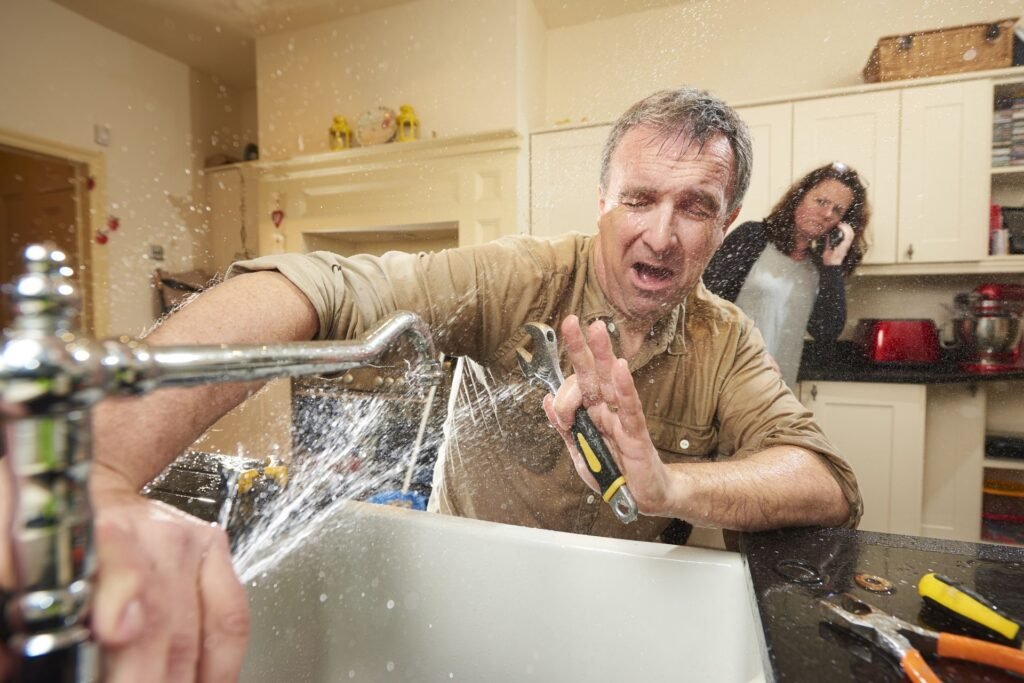
Leaks behind fitted kitchens often stay hidden until a cabinet base has swollen, flooring has lifted or damp has spread. During a refit, all connections should be checked carefully once water is restored, including the tap tails, waste fittings, appliance valves and hose connections.
Tidy workmanship matters here. Pipework should be secure, connections should be accessible where possible, and any holes cut into cabinets should be sensible and clean. A kitchen is an investment, and plumbing should support it rather than leave avoidable weak points behind it.
When to book a plumber for a kitchen refit
The best time to speak to a plumber is after you have a draft kitchen design but before units are ordered or installed. You do not need every finish chosen, but the sink, dishwasher, washing machine and main cabinet positions should be broadly decided.
An early visit can identify issues that drawings do not show, such as old pipework, restricted floor voids, a poorly positioned existing waste pipe or damage caused by a previous leak. It also lets you plan the work in the right sequence. First-fix plumbing is usually completed before units and worktops are fitted, then final connections are made once the kitchen is ready.
If your kitchen fitters are already on site and you have discovered that connections do not line up, get help promptly. Delaying the decision can hold up worktops, appliance installation and handover of the room. A practical solution early on is normally less disruptive than taking new units apart later.
Choosing the right plumber for a kitchen refit
Price matters, but the cheapest quote is not always the best value if it leaves you arranging return visits, repairing cabinet damage or dealing with a leak after the fitters have left. Look for a plumber who is willing to discuss the layout, explain what is involved and flag up limitations before work begins.
A reliable local plumber should give clear advice on what can be done, what may add cost and where there are choices. For example, retaining the current sink location may be simpler, while moving it may involve more pipework and access work. Neither option is automatically right – it depends on your budget, kitchen design and the condition of the existing installation.
When comparing plumbers, ask about these practical points:
- whether they can inspect the proposed layout before fitting starts;
- what first-fix and final connection work is included;
- how appliance feeds, wastes and isolation valves will be arranged;
- whether they will test for leaks and check drainage before the job is signed off.
Clear communication is particularly valuable where several trades are involved. Your plumber should be able to coordinate timings with the kitchen fitter and avoid leaving a newly fitted kitchen without a working sink for longer than necessary.
Common kitchen refit problems that are easier to prevent
Blocked or slow-draining sinks are often caused by poor waste pipe routing, especially where a sink has been moved. Too many bends, an unsuitable fall or an awkward connection can all make drainage less reliable. Getting the route right at the installation stage helps avoid repeat callouts later.
Another common problem is an appliance hose that has been trapped behind a machine. Once the appliance is pushed into place, a hose can kink or work loose if there is not enough clearance. This can affect drainage or create a leak that is not visible until damage has already occurred.
Old isolation valves are also worth considering during a refit. If they are stiff, corroded or unreliable, replacing them while access is open can save trouble in the future. The same applies to ageing pipework or fittings found behind old cabinets. It may be sensible to deal with a weakness now rather than cover it up and hope it lasts.
Kitchen refits in rental and commercial properties
For landlords and letting agents, kitchen plumbing needs to be durable, accessible and straightforward to maintain. A small leak beneath a sink can quickly become a damaged unit, tenant complaint and insurance issue if it is missed. Planning accessible valves and sound appliance connections helps reduce the risk.
Restaurants, cafés, shops and other occupied premises also need work arranged with minimum disruption. A kitchen sink or appliance connection may be central to daily trading, staff welfare or hygiene. A plumber who understands the pressure of an occupied property can help plan the work around access, opening hours and the need to keep disruption under control.
For homeowners across Hull and the surrounding East Yorkshire area, the same principle applies: do not wait until the cabinets are in place to find out whether the plumbing works with the design. A short conversation and proper assessment can protect the time, money and effort going into your new kitchen.
If you are planning a kitchen refit, have discovered a leak behind existing units or need final connections completed properly, contact HJZ Plumbing directly on 01482 236483. Clear advice at the right stage can keep your project moving and help your finished kitchen stay dry, reliable and easy to use.