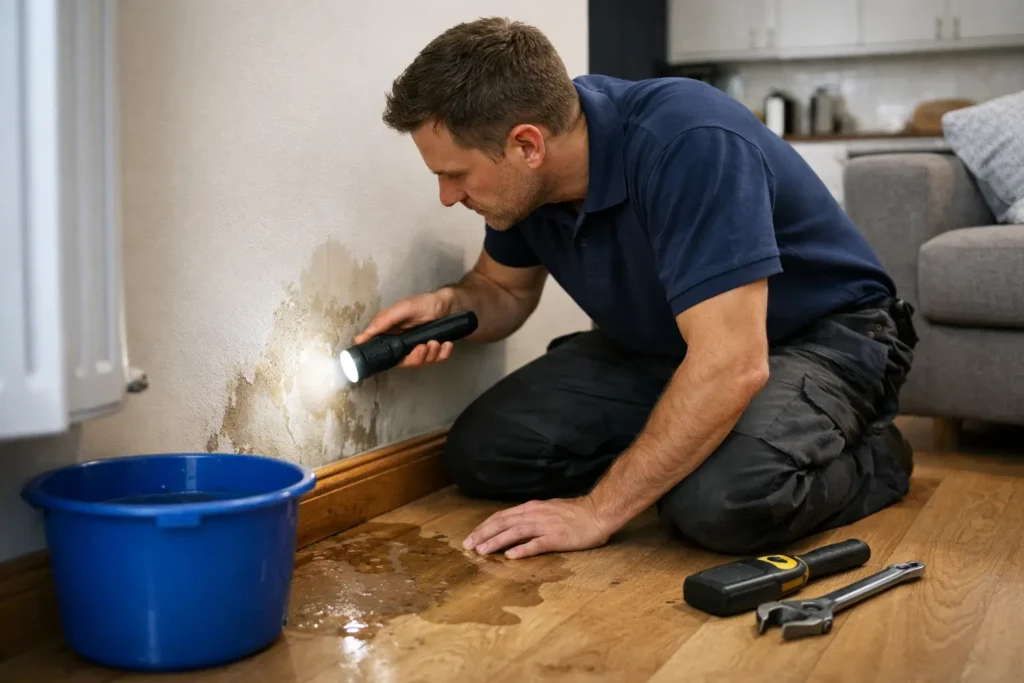
A hidden leak rarely announces itself with a burst pipe and a flooded floor. More often, it starts with a small clue – a patch of damp near a skirting board, a drop in water pressure, or a water bill that suddenly makes no sense. If you need to identify hidden water leak problems early, the key is knowing what to look for before minor damage turns into stained ceilings, ruined flooring, mould growth, or disruption for tenants, staff, or customers.
For homeowners, landlords, and commercial premises, hidden leaks are one of the most expensive plumbing issues to ignore. Water travels. It can spread behind walls, under floors, through ceilings, and into cupboards long before the source becomes obvious. That means the visible damage is not always where the leak began.
Why hidden leaks are often missed
Most hidden leaks develop in places people do not inspect every day. Pipework may run beneath floorboards, behind tiled walls, inside boxed-in units, or above suspended ceilings. In occupied homes and businesses, those areas stay out of sight until the signs become hard to ignore.
The difficulty is that the early symptoms can look like something else. A musty smell might be dismissed as poor ventilation. A discoloured wall may be blamed on condensation. A slow drop in pressure might seem like a separate plumbing fault. Sometimes it is a leak, sometimes it is not, and that is why a careful check matters.
How to identify hidden water leak issues at home or work
Start with what has changed recently. Hidden leaks often show up through patterns rather than one dramatic event. If your property feels different, smells different, or your plumbing is behaving differently, pay attention.
A higher water bill is one of the clearest signs. If your usage habits have not changed but your bill has climbed, water may be escaping somewhere in the system. In rental properties and commercial sites, this is particularly easy to miss if multiple people use the building and no one notices the trend straight away.
Damp patches are another warning sign. These may appear on ceilings, walls, around chimney breasts, near skirting boards, or at the base of kitchen and bathroom units. The patch may look yellow, brown, or darker than the surrounding surface. Paint can bubble, plaster can soften, and wallpaper can start lifting.
Smell matters too. A persistent musty odour, especially in bathrooms, kitchens, utility rooms, stock rooms, or unused corners, often points to moisture sitting where it should not. If a room smells damp even after cleaning and airing out, it is worth investigating further.
Then there is sound. In a quiet property, you may hear a faint hiss, trickle, or drip when no taps, appliances, or toilets are in use. That does not always mean a hidden pipe leak, but it should not be ignored.
Visible clues that often point to a concealed leak
Some signs are subtle, but others are more direct once you know what they mean. Sagging ceilings suggest water has been collecting above. Warped laminate or lifting vinyl can mean moisture is trapped underneath. Dark mould spots around walls or corners may be caused by an ongoing leak rather than general condensation.
In kitchens and bathrooms, check the silicone edges, the backs of cupboards, and the areas around toilets, basins, showers, and washing machines. In commercial washrooms or staff kitchens, repeated moisture around fixtures should never be written off as normal splashing, especially if it keeps returning after the area is dried.
Outside, a hidden leak may show itself through unusually green patches of grass, soft ground, pooled water, or a driveway area that stays wet for no obvious reason. External supply pipe leaks can be especially difficult to spot because the water may never enter the building in an obvious way.
The water meter check
If you want a simple way to identify hidden water leak activity, your water meter can help.
First, make sure all water outlets are off. That includes taps, washing machines, dishwashers, toilets that may be refilling, and any appliances connected to the supply. Then check the meter reading. Wait for a period without water use, even 30 minutes can be useful, and check it again.
If the reading has changed, there is a good chance water is still moving through the system somewhere. This does not tell you exactly where the leak is, but it helps confirm whether there is likely to be one. In larger commercial properties, the test can be harder because of constant usage, but it is still useful during quiet periods.
When it might not be a hidden leak
Not every damp patch comes from a leaking pipe. Condensation, failed sealant, roof defects, blocked gutters, and poor ventilation can all create similar symptoms. That is why guessing can waste time and money.
For example, mould around a cold external wall may have more to do with airflow than plumbing. A stain on an upstairs ceiling could be caused by a shower tray seal, but it might also relate to something entering from outside. The right fix depends on the true cause. Replacing pipework when the issue is actually failed grout or perished sealant will not solve much.
What to do if you suspect a hidden leak
Act early, even if you are not fully sure. Hidden leaks do not usually improve on their own, and waiting often means more damage to plaster, timber, flooring, electrics, decorations, and stored items.
Start by limiting water use in the affected area if possible. If the sign appears near a toilet, basin, shower, sink, or appliance, stop using it until it has been checked. Move furniture, stock, or valuables away from damp areas. If the leak seems serious, or water is affecting ceilings or electrical fittings, turn off the water supply and seek professional help straight away.
For landlords and letting agents, speed matters even more. A small leak in an occupied property can quickly become a larger repair, and delays can lead to tenant complaints, damage claims, and avoidable disruption. For cafés, restaurants, hotels, offices, and schools, a concealed leak can affect hygiene, access, and day-to-day use of the building.
Why professional leak investigation saves time
Finding a hidden leak is not always about ripping out tiles or lifting floors at random. A good plumber will look at the pattern of symptoms, test likely fixtures and pipe runs, and narrow the issue down before carrying out repairs. That practical approach reduces unnecessary disturbance and helps get the problem under control faster.
There is also a difference between finding the visible damage and finding the actual fault. Water often travels along joists, pipes, and surfaces before appearing somewhere else. What looks like the centre of the issue may simply be the point where water has finally emerged.
That is why an experienced plumber will usually check the surrounding plumbing system as well. In some cases the repair is straightforward, such as a leaking toilet connection, failed tap tail, shower waste issue, or damaged pipe joint. In others, the source takes more time to trace. Either way, early attendance gives you a better chance of avoiding wider repairs.
Preventing future hidden leak problems
The best way to avoid serious hidden leaks is routine attention to small plumbing faults. Dripping taps, loose toilet feeds, ageing sealant, slow drains, and minor damp marks are often treated as jobs for another day. That is understandable, but neglected plumbing tends to get more expensive rather than less.
Regular checks help. Look inside cupboards beneath sinks, around the base of toilets, near shower trays, and behind appliances where possible. Keep an eye on water pressure changes and unexplained damp smells. In managed properties and commercial premises, encourage staff or tenants to report small issues early rather than waiting until damage becomes obvious.
If your property is older, has had previous leak repairs, or contains a lot of boxed-in pipework, staying alert is even more worthwhile. Older fittings and joints can fail without much warning, and occupied buildings often hide the early signs.
When you suspect a leak, clear advice and a prompt response make all the difference. If you need help tracing or repairing a hidden leak in your home, rental property, shop, office, café, hotel, or other premises, contact HJZ Plumbing on 01482 236483 or visit www.hjzplumbing.com. A fast check now can prevent a much bigger repair later.