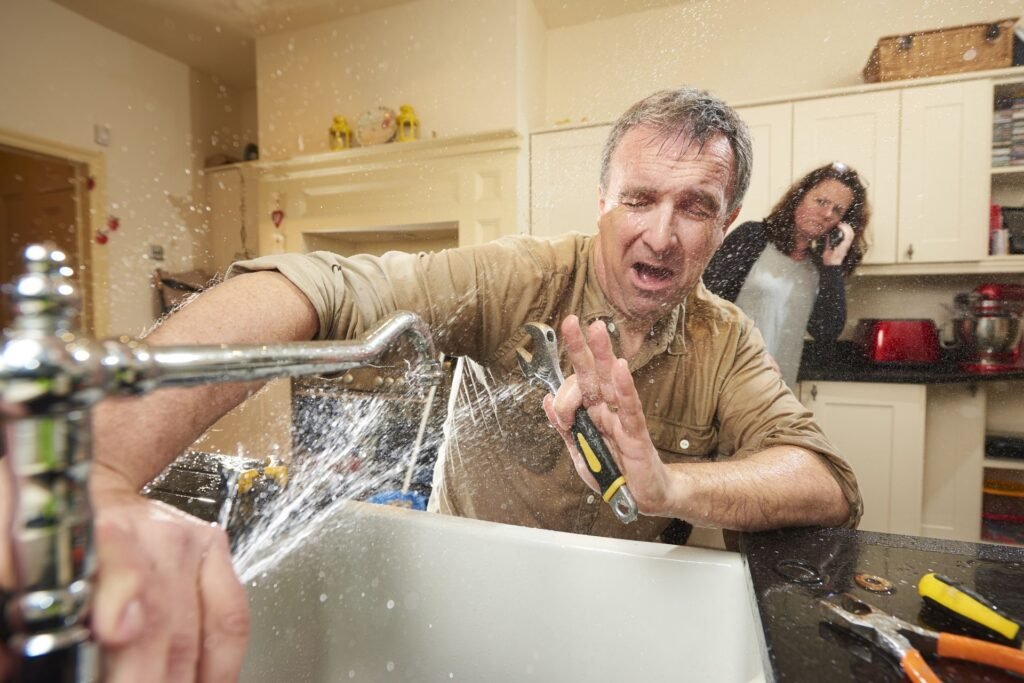
A sink that starts draining slowly rarely stays a small problem for long. In homes and business premises alike, one of the first questions people ask is what causes blocked drains, especially when water backs up at the worst possible time, unpleasant smells start to spread, or a toilet stops flushing properly.
The short answer is that drains usually block because waste builds up over time, or because something enters the system that should never have gone down it in the first place. The exact cause depends on where the blockage is, how the pipework is laid out, and how the drains are being used day to day. In a family home, the issue might be hair, soap and grease. In a café or takeaway, it may be fat, food debris and constant heavy use. In rental properties and shared buildings, repeat blockages are often a sign that the underlying cause has not been dealt with properly.
What causes blocked drains in kitchens, bathrooms and outside?
Most drain problems begin in predictable places. Kitchens, bathrooms and external drainage runs all collect different types of waste, which is why the cause can vary from room to room.
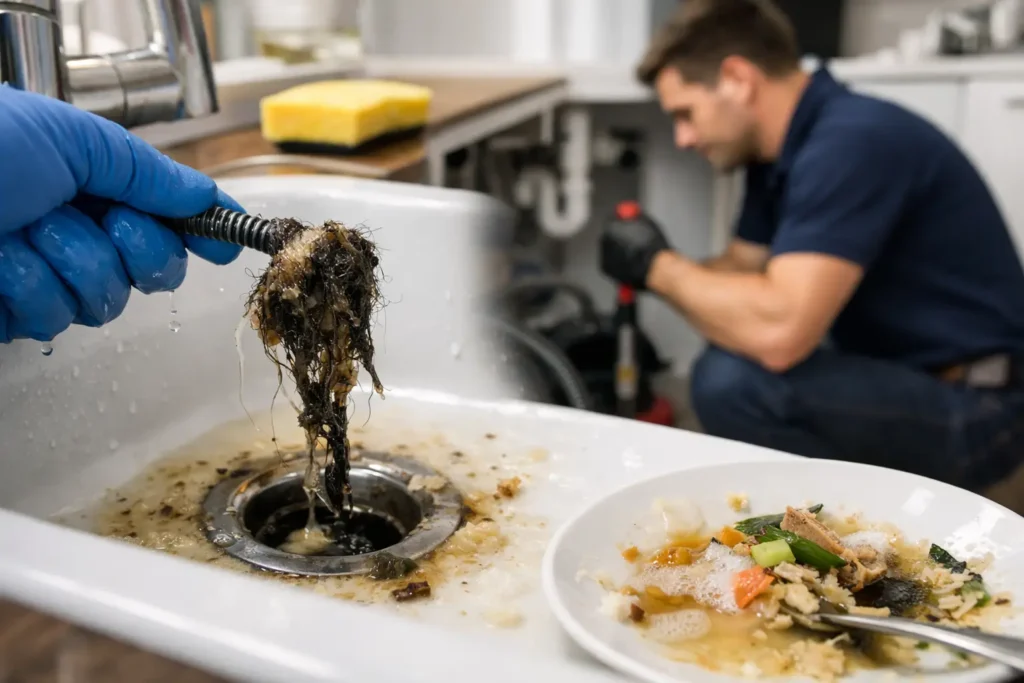
In kitchens, grease is one of the biggest culprits. It may go down the sink as a liquid, but it cools quickly and starts to cling to the inside of the pipe. Over time, that sticky layer traps food particles, coffee grounds and other debris until water can no longer pass through freely. This is common in busy households, but it is an even bigger issue in commercial premises where sinks are used constantly throughout the day.
In bathrooms, hair and soap residue are usually to blame. Hair catches in plugholes and pipe bends, then combines with soap scum, toothpaste and general grime. The result is a dense blockage that slowly reduces the flow of water. Showers and baths are especially prone to this because the build-up forms gradually and often goes unnoticed until the tray or bath starts holding water.
Outside, drains can block because of leaves, moss, silt, litter and even tree roots. Gullies and external drains take a lot of punishment in poor weather, and if they are not kept clear, rainwater has nowhere to go. That can lead to overflowing drains, standing water and damp problems around the property. In some cases, roots can enter cracked pipework and create a more serious obstruction that needs professional attention.
The most common things that should not go down a drain
A blocked drain is often caused by everyday habits rather than a sudden fault. Many people do not realise that flushing or rinsing away the wrong material can cause a problem days or even weeks later.
Wet wipes are a major example. Even products labelled as flushable can create blockages, especially when they catch on rough pipe surfaces or combine with grease and other waste. Sanitary products, nappies, cotton buds, paper towels and excessive toilet roll can do the same. Toilets are designed for human waste and toilet paper only. Anything else increases the risk of a blockage further down the line.
In the kitchen, fat, oil and grease are the obvious offenders, but starchy foods also cause trouble. Rice, pasta, flour and peelings can swell, clump together and settle in traps and bends. Small amounts may seem harmless, but repeated disposal through the sink is what creates the build-up.
Even products meant for cleaning can contribute to blockages if they are used to mask the issue rather than solve it. Repeated use of chemical drain cleaners may shift a small obstruction, but they do not always remove the full blockage. In some cases, they harden residue, damage older pipework or make later repair work more awkward.
Why blocked drains sometimes keep coming back
If a drain has been unblocked before but the problem returns, there is usually more going on than a one-off build-up. Repeated blockages often point to poor pipe gradients, partial collapses, scale inside the pipe, root ingress or a blockage that was only cleared enough to restore short-term flow.
This is where a proper inspection matters. A drain can appear to be working again after water starts moving, but that does not mean the line is fully clear. If there is still debris left behind, it will collect more waste and the problem will return. That is frustrating for homeowners and particularly disruptive for landlords, letting agents and businesses trying to avoid repeat callouts.
Older properties can be more vulnerable because drains may have narrower pipework, more bends, or wear and tear that has built up over the years. Commercial sites have a different challenge. Heavy use means drains are under constant pressure, so even a small restriction can quickly become a full blockage.
Early signs that a drain is starting to block
Blocked drains rarely happen without warning. The signs are often there early, but they are easy to ignore until the situation becomes urgent.
Slow-draining sinks, showers or baths are usually the first clue. You may also notice gurgling sounds after flushing a toilet or emptying a basin. Bad smells are another common sign, especially if waste is starting to sit in the pipe rather than flow away properly.
Outside, look for water sitting around gullies, overflowing covers or drains that struggle during rain. Indoors, watch for rising water in toilets, bubbling in nearby plugholes, or waste water backing up in another fixture. For example, if using the washing machine causes water to rise in the sink, that suggests a developing blockage in the shared waste pipe.
Acting early can make a big difference. A partial blockage is usually easier, cleaner and less disruptive to deal with than a completely blocked system that causes overflow, leaks or contamination.
What causes blocked drains to become an emergency?
Not every blocked drain is an emergency at first, but it can become one quickly if the property is occupied and facilities are limited. If the only toilet in a home stops working, if foul water is backing up into a kitchen or bathroom, or if a business cannot use its washrooms safely, the issue needs prompt attention.
For commercial premises such as cafés, restaurants, hotels, shops, schools and offices, the impact goes beyond inconvenience. Hygiene standards, customer experience, staff welfare and day-to-day trading can all be affected. A blocked drain in a takeaway kitchen or customer toilet area needs dealing with quickly and properly.
For landlords and property managers, blocked drains can also become a tenant issue very fast. Delays can lead to complaints, property damage and extra repair costs if overflowing waste water affects floors, walls or fittings.
Can you prevent blocked drains?
In many cases, yes. Prevention is largely about what goes into the system and how quickly small warning signs are acted on.
Using sink strainers, disposing of cooking fat in the bin once cooled, and keeping wipes and hygiene products out of the toilet all help. In bathrooms, regularly removing hair from shower and bath wastes makes a real difference. Outside, clearing leaves and debris from gullies can reduce the risk of rainwater blockages.
That said, prevention is not always enough on its own. If pipework is damaged, poorly installed, or already heavily restricted, careful use may slow the problem but not eliminate it. That is why professional cleaning and diagnosis are sometimes the most practical option, especially where blockages are recurring.
When to call a professional plumber
If you have tried basic safe measures and the drain is still slow, backing up, or smelling unpleasant, it is sensible to get it checked. The same applies if more than one fixture is affected, if the blockage keeps returning, or if there are signs of external drainage problems.
Professional drain unblocking is not just about restoring flow. It is about finding the actual cause, clearing the line properly and reducing the chance of the same issue happening again. That is especially important in occupied homes, rental properties and busy workplaces where disruption needs to be kept to a minimum.
If you are dealing with a blocked drain in Hull, Beverley or the surrounding area, HJZ Plumbing can help with fast, practical support for homes and commercial premises. If water is backing up, smells are getting worse, or you want the problem sorted before it causes damage, call 01482 236483 or visit www.hjzplumbing.com.
A blocked drain is never convenient, but it is usually much easier to deal with when caught early rather than after it has spread from a slow sink to a much bigger problem.