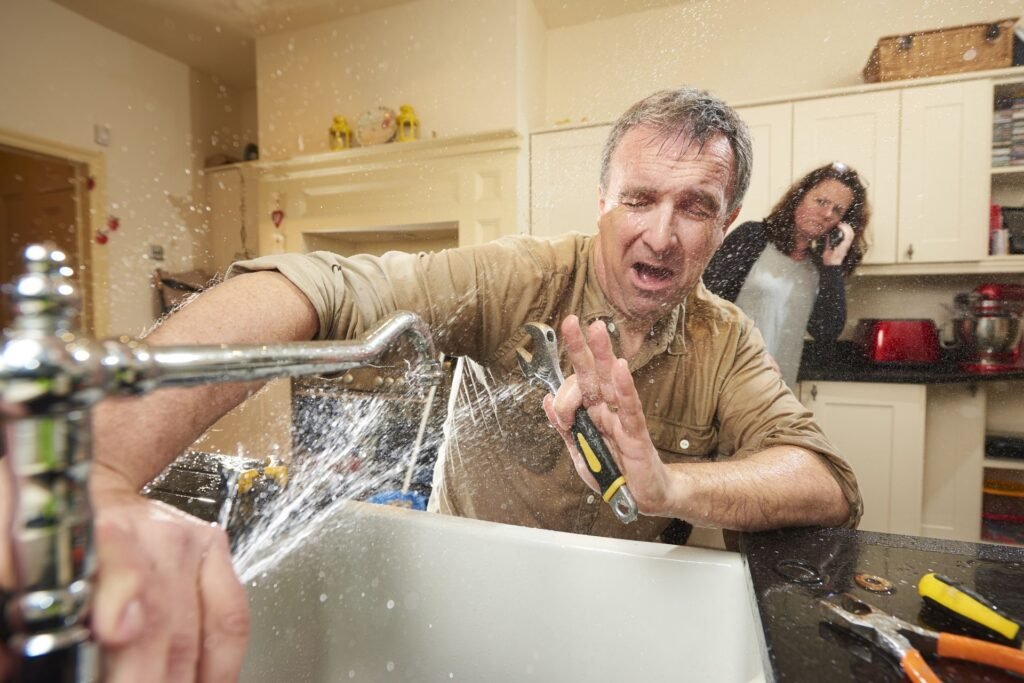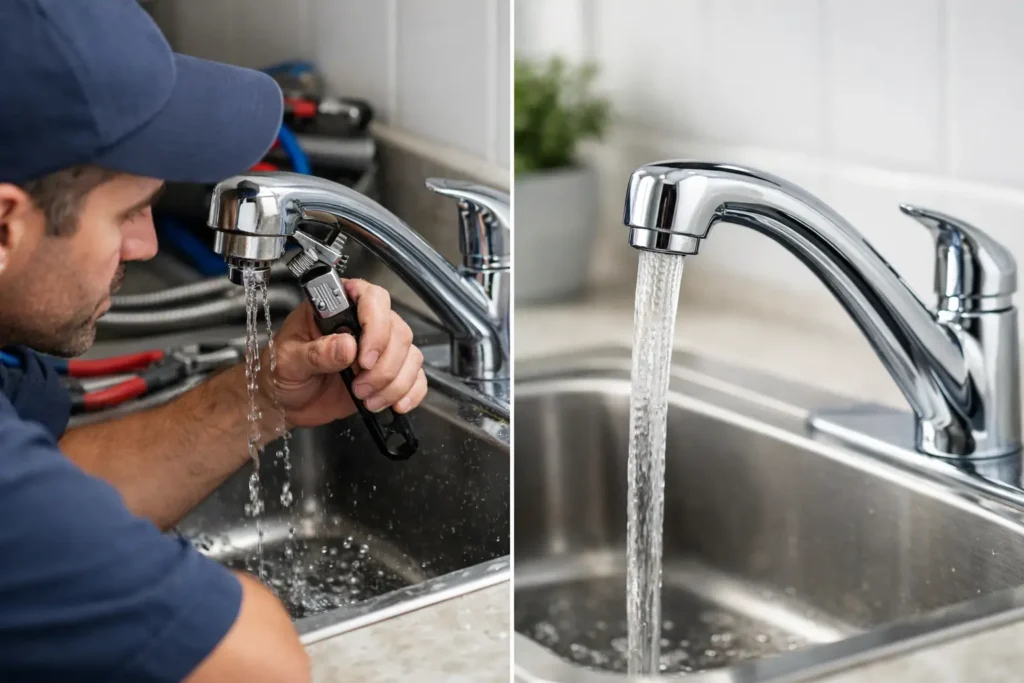
A dripping tap rarely stays a small annoyance for long. What starts as a steady drip can turn into wasted water, staining around the basin, a stiff handle, or a tap that suddenly refuses to shut off properly. If you are looking for tap repair Hull homeowners and landlords can rely on, it helps to know what is causing the fault, what can safely be checked at home, and when a proper repair is the better option.
In most homes, tap problems build up slowly. Washers wear down, ceramic cartridges become stiff, seals fail, and limescale starts affecting moving parts. In kitchens and bathrooms, daily use puts a lot of strain on even good quality fittings. The result is usually one of a few familiar issues – dripping, leaking from the base, reduced water flow, noisy operation, or loose handles.
Common tap problems in Hull homes
The most common callout is still the classic dripping tap. On older styles, the issue is often a worn washer. On newer mixer taps, the fault is more likely to be inside the ceramic cartridge. Both can usually be repaired, but it depends on the make, age and overall condition of the tap.
Leaks around the base of the tap are another frequent problem. If water is gathering where the tap meets the sink or worktop, the cause may be worn O-rings, perished seals, or movement in the tap body itself. Sometimes it is a simple seal replacement. Other times, the tap has loosened over time and needs to be removed and refitted properly.
Low pressure from one tap can also point to a local fault rather than a whole-house plumbing issue. Aerators get blocked with debris and limescale, flexible tap tails can kink, and internal components can restrict flow. If the problem is isolated to one tap, it is usually repairable without major work.
Then there are the taps that become difficult to turn. Stiff handles, grinding movement, or taps that suddenly feel loose all suggest wear inside the mechanism. This can often be resolved by replacing the cartridge or internal parts, though cheaper taps are sometimes not worth rebuilding if parts are poor quality or hard to source.
Tap repair Hull: repair or replace?
This is where a lot of customers want a straight answer, but it is not always black and white. A repair makes sense when the tap is good quality, the finish is still sound, and replacement parts are available. In those cases, replacing a washer, valve, cartridge or seal can restore the tap without the cost of fitting a whole new unit.
Replacement is often the better route when the tap is heavily corroded, the body is cracked, the mounting has become unstable, or spare parts are no longer practical to find. Very budget taps can be especially awkward. Even if one fault can be fixed, another may follow soon after.
For landlords and property owners, reliability matters as much as price. A cheaper short-term repair is not always the best value if the tenant is likely to be without a working kitchen or bathroom tap again a few weeks later. The right choice depends on condition, access, and how much life is realistically left in the fitting.
What you can check before calling a plumber
There are a few sensible checks you can make without taking anything apart. First, note exactly where the water is leaking from. A drip from the spout suggests one type of fault, while water under the sink, around the base, or from the pipework points to something different.
Next, check whether the issue affects hot, cold or both sides. If only one side is dripping or running poorly, that helps narrow down the fault. Also pay attention to whether the tap handle feels loose, overly stiff or rough when turned.
If flow is poor, look at the aerator on the end of the spout. Limescale and debris can build up there, especially in kitchen taps. Cleaning that may improve the flow, but if the pressure stays poor, the blockage could be internal.
What is best avoided is forcing parts that do not want to move. A handle that has seized or a nut that is corroded can easily snap a fitting or damage the tap body. Turning off the water supply without knowing what you are isolating can also create extra problems if valves are old or stuck.
Why tap repairs are not always as simple as they look
From the outside, a tap appears straightforward. In practice, repairs often involve awkward access, seized fixings and worn fittings that do not come apart cleanly. Kitchen sink taps can be especially difficult where the pipework is buried behind cupboards, waste pipes and appliances.
A proper repair is not just about stopping the obvious leak. The tap needs to be checked for wear in the parts around it too. Isolation valves may not hold properly, flexi hoses can be near the end of their life, and water damage under the sink can reveal that the leak has been ongoing for longer than expected.
It is also common to find that the visible symptom is only part of the issue. A dripping mixer tap may need a cartridge, but the mounting could be loose as well. A leak at the base might seem minor, but if water has been tracking behind the sink unit, the repair needs to deal with the source and the consequences.
Likely costs and what affects the price
Customers usually want to know whether a tap repair will be a quick, affordable job or something larger. The honest answer is that cost depends on the fault, the type of tap, and how easy it is to access. Replacing a standard washer or cartridge is usually much more straightforward than removing a seized kitchen mixer with poor under-sink access.
Parts also vary widely. Some taps use standard components that are easy to source. Others require brand-specific cartridges or specialist fittings. If the tap is an older model or from a less common manufacturer, part availability can affect both timing and cost.
There is also a difference between repairing a fault early and leaving it until damage spreads. A small leak dealt with promptly is one thing. A long-term leak that has affected cupboards, worktops or surrounding fittings becomes more involved. That is one reason it is worth acting sooner rather than waiting for a complete failure.
When a tap problem becomes urgent
Not every faulty tap is an emergency, but some situations do need fast attention. If a tap will not turn off properly, is leaking heavily underneath, or has caused water to spread into cupboards or flooring, it is no longer just an inconvenience. Fast response matters because water damage can escalate quickly.
Commercial premises, food businesses, hotels and rental properties often have less room for delay. A failed kitchen tap in a busy setting can disrupt day-to-day use immediately. For landlords, a bathroom or kitchen tap fault can also become a tenant issue that needs dealing with promptly and professionally.
A local plumber can usually tell from a description whether the issue is likely to be contained or whether it needs urgent attendance. A steady drip is one thing. Water pouring into a unit or a tap body that feels close to giving way is something else entirely.
Choosing a plumber for tap repair in Hull
A good tap repair is about more than changing a part. You want someone who turns up when agreed, works tidily, explains the fault clearly and gives practical advice if replacement is the smarter option. That matters just as much in a small plumbing job as it does in a larger installation.
For local households and property owners, the benefit of using an established local service is straightforward. You are dealing with someone who understands the type of properties in the area, the common wear issues found in everyday plumbing, and the importance of getting water back to normal without unnecessary delay. HJZ Plumbing works with exactly those kinds of day-to-day repair issues, with the same care and respect given to larger jobs.
There is also value in having a plumber who can see the wider picture. A tap fault may connect to ageing pipework, poor isolation valves, sink waste issues or bathroom wear that needs attention next. Having one dependable contact for ongoing plumbing support is often easier than treating each problem as a separate search.
A small repair that protects the rest of your home
Taps are used constantly, so even minor faults deserve attention. A drip, leak or stiff mechanism may seem manageable for a while, but plumbing problems are usually cheaper and simpler when caught early. If a tap is no longer working as it should, getting it checked properly can save water, prevent damage and restore a bit of everyday normality to your kitchen or bathroom.